


- Filter
- Translated with AI
Demand-Controlled Filtration in Practice
How a simple nighttime setback in the cleanroom saves around 50,000 kWh per year
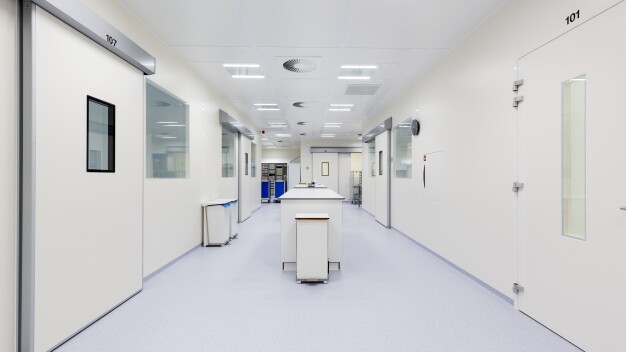
Cleanroom Roosendaal
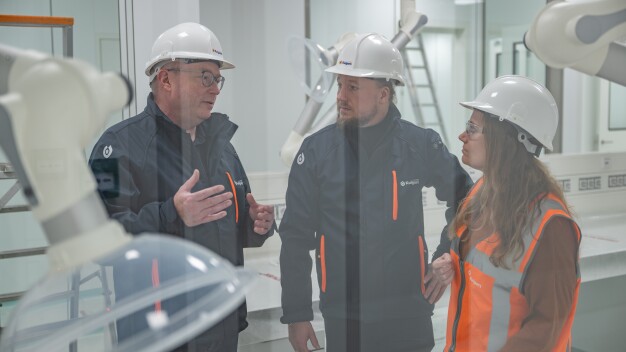
Energy efficiency in the cleanroom does not have to be complicated. A practical example from an ISO 5 cleanroom shows that even a time-controlled nighttime setback of the recirculated air significantly reduces energy demand – without compromising cleanliness or process safety.
Energy efficiency comes into focus in cleanroom technology
Since the introduction of Part 16 (“Energy Efficiency”) of DIN EN ISO 14644, interest in more sustainable solutions in cleanroom technology has been growing. This development has been further intensified by the sharp rise in energy prices since the coronavirus pandemic.
Among other things, the standard names demand-based control (“adaptive control”) as a possible measure – also known in the industry as Demand Controlled Filtration (DCF). Control can be based on
– particle concentration,
– room occupancy (number of people), or
– quite simply on a time-controlled basis using a nighttime setback.
The following practical example shows that energy-efficient measures do not have to be complex to have a noticeable effect.
The project: the Lavans cleanroom
In 2023, Lavans commissioned a new cleanroom in which cleanroom garments for the pharmaceutical and microtechnology industries are washed, dried and packaged. The packaging area is classified as ISO 5.
The ceiling of this area is completely fitted with Fan Filter Units (FFUs). During operation, they generate a uniform airflow of around 0.45 m/s. In the upper part of the room, the airflow is largely unidirectional (low-turbulence displacement airflow). However, since the return air is extracted through wall grilles near the floor rather than through the floor, the airflow has to be redirected – meaning it is not unidirectional throughout.
The fully covered FFU ceiling and a room height of 3 metres result in an air change rate of 540 per hour. This corresponds to an airflow volume of 100,278 m³/h – a considerable amount for a cleanroom.
Energy saving was incorporated from the outset
Together with Lavans, several energy-saving measures were already integrated during the planning stage. These include enthalpy control for the supply air (make-up air) outside operating hours and Demand Controlled Filtration: Outside operating hours, the recirculated air is reduced from 100% to 20% – from 100,278 m³/h to 20,055 m³/h.
The decisive factor is that the cleanroom must remain under positive pressure at all times. Therefore, not only the cleanroom itself but also the plenum above the FFU ceiling is kept under positive pressure (see Figure 1). The return air ducts are designed to be virtually pressureless. This allows the FFUs to be ramped up and down without significantly affecting the pressure conditions. The air handling unit manages the supply and extract air in the plenum, while a control damper in the return air duct stabilises the pressure in the plenum and cleanroom.
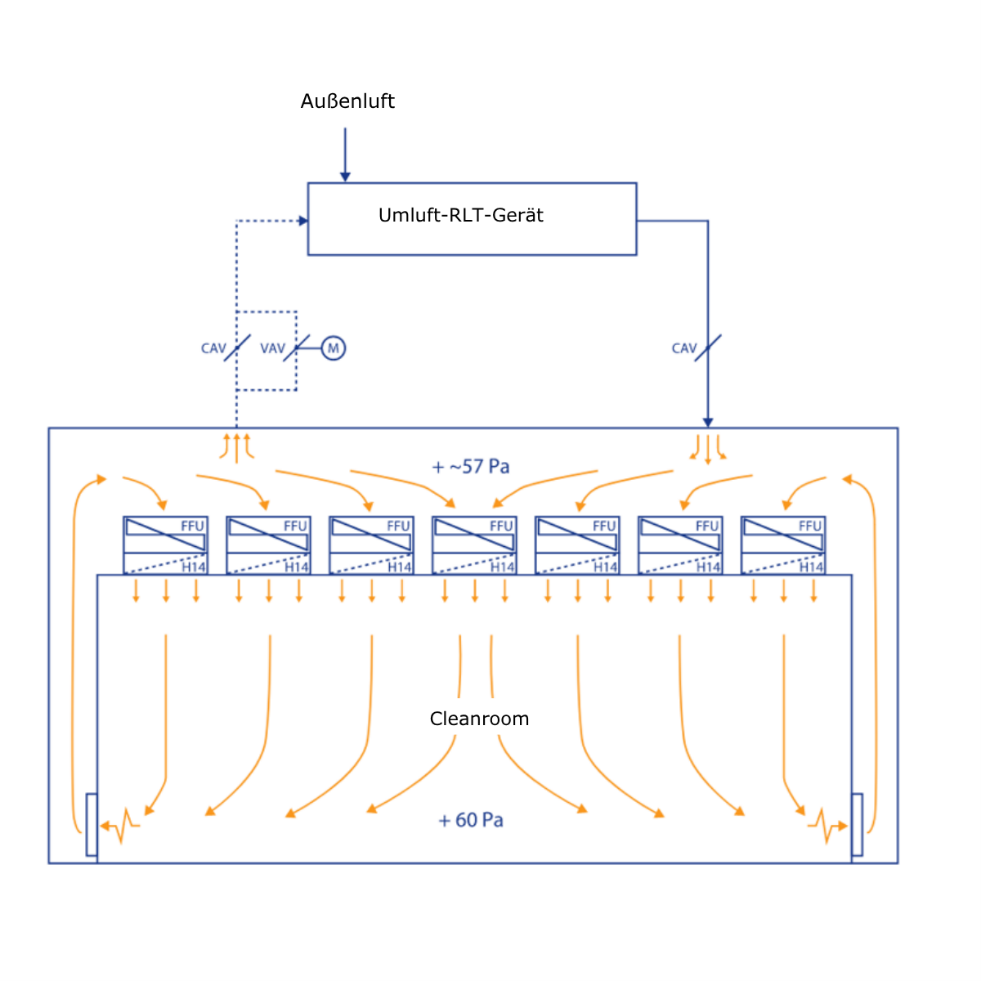
Figure 1: Pressure maintenance principle – the cleanroom and the plenum above the FFU ceiling are under positive pressure.
Measurement results: stable pressure, unchanged cleanliness
Differential pressure and particle concentration (≥ 0.5 µm) were recorded over a period of three days. The nighttime setback is active outside working hours, from 7:00 a.m. to 5:00 p.m.
Measurements were taken using a particle counter with a 1.0 CFM airflow rate – meaning a significantly higher sample volume than that of the 0.1 CFM devices typically used for continuous monitoring. The results were converted to values per cubic metre for unambiguous interpretation.
The key findings:
– During the day, the pressure fluctuates due to door movements.
– When switching from day to night operation, the pressure remains stable.
– The particle concentration remains unaffected both by door movements and during the nighttime setback, and remains well below the ISO 5 limit throughout.
It should be noted that the particle counter was positioned at a fixed location, meaning that the measurement is not necessarily representative of the entire room.
Approximately 50,250 kWh saved per year
The nighttime setback results in considerable annual energy savings. A lower recirculated air volume outside operating hours not only reduces the power consumption of the fans, but also the cooling demand of the system. For this cleanroom, the annual saving amounts to approximately 50,250 kWh.
The measurements taken so far indicate that the nighttime airflow volume could be reduced even further without negatively affecting the particle concentration. Kuijpers and Lavans are currently investigating this together – fully in line with Section 4.12 (“Monitor, review and feedback”) of ISO 14644-16, which recommends continuous optimisation.
Conclusion: major impact with simple measures
Demand Controlled Filtration does not necessarily have to rely on complex sensor technology such as particle measurement or people counting. Even a simple time-controlled system can already deliver considerable energy savings. This practical example shows that a significant sustainability impact can be achieved with manageable effort – without compromising the quality and safety of the cleanroom process.
Would you like to know how much energy is hidden in your cleanroom?
Please feel free to contact Michael Habenicht, Branch Manager Germany, at mhabenicht@kuijpers.com
Sources
1. DIN EN ISO 14644-16 – Cleanrooms and associated controlled environments – Part 16: Energy efficiency in cleanrooms and separative devices (ISO 14644-16:2019)
2. The Lavans cleanroom on YouTube: https://youtu.be/IxDIXFhSawQ

Kuijpers Controlled Environments GmbH
Siemensstraße 31
47533 Kleve
Germany
Phone: +49 172 1560362
email: deutschland@kuijpers.com
Internet: https://www.kuijpers.com/de/