New year, new job? View the vacancies! More ...
Vaisala ClearClean Piepenbrock PMS


All publications from Fraunhofer-Institut für Werkstoff- und Strahltechnik IWS

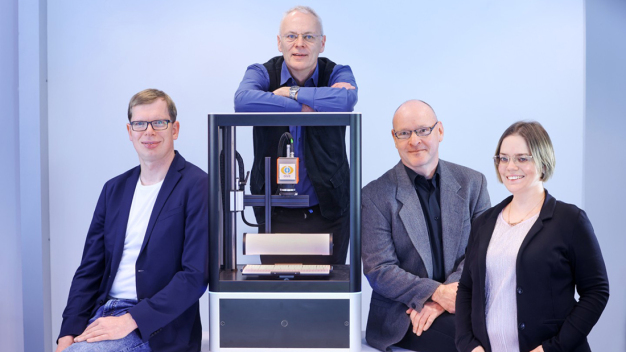
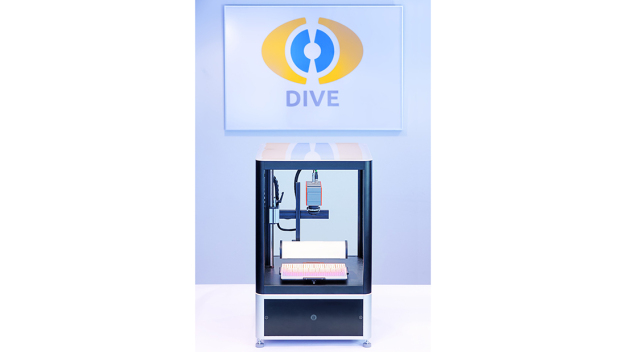
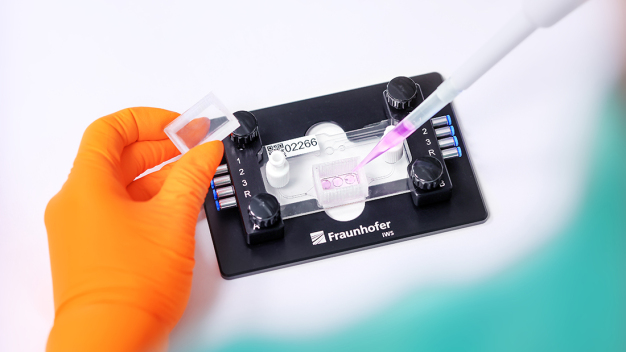
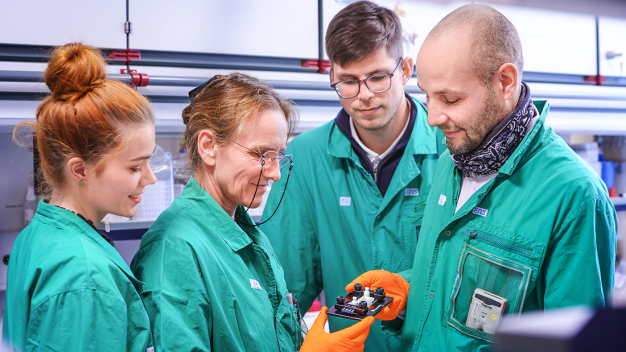
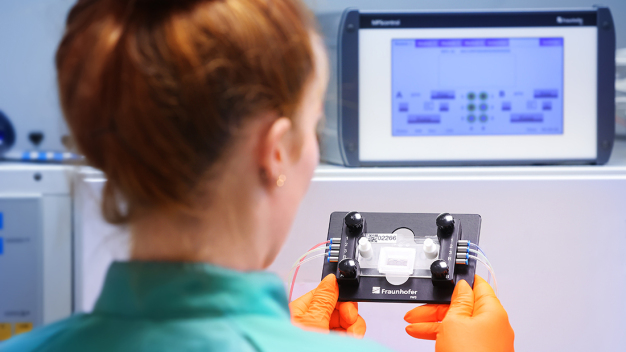
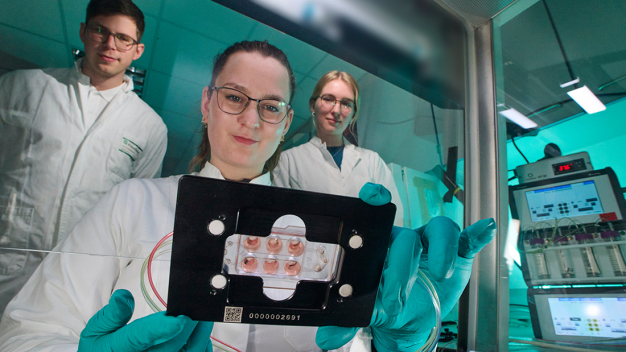
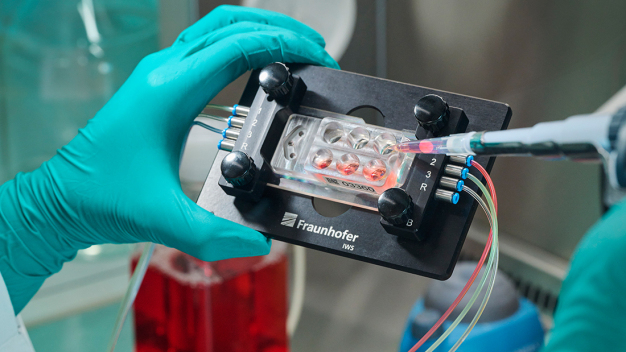
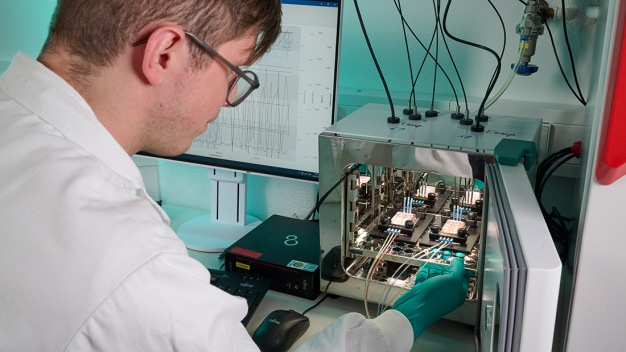
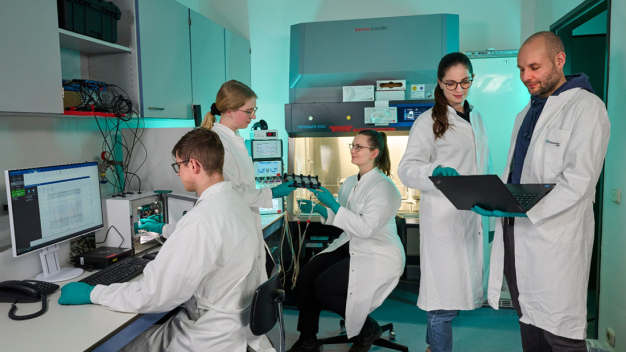
Together, researchers from Fraunhofer ITEM, Fraunhofer IWS, and the University of Regensburg are investigating the metastasis of tumor cells in microphysiological systems. © minkus-images.de/Fraunhofer IWS / Researchers from Fraunhofer ITEM, Fraunhofer IWS, and the University of Regensburg are jointly investigating the growth of tumor cells in microphysiological systems. © minkus-images.de/Fraunhofer IWS For several years, Fraunhofer IWS has been developing microphysiological systems the size of a pillbox. Now, it is possible to culture up to ten tissue slices on a single chip. © minkus-images.de/Fraunhofer IWS In order to find out how cancer cells develop and spread in the body, the research partners want to simulate the environmental conditions in the microsystems even more effectively in the future. © minkus-images.de/Fraunhofer IWS In addition to cancer, other diseases such as fibrosis can also be studied on tissue sections in microphysiological systems. Researchers from Fraunhofer IWS and Fraunhofer ITEM are collaborating on this within the FIBROPATHS project. © minkus-images.de/Fraunhofer IWS
  • Science

Fraunhofer IWS Develops Microphysiological Systems for Cultivation of Tumor Tissue Sections in Joint Effort

New Opportunity for Cancer Therapy: Miniature Lab Provides Insights into Metastases Development

Every year, around half a million people in Germany are diagnosed with cancer. Despite the existence of effective treatment options for many types of cancer, many questions about the development of the disease remain unanswered. Why does a tumor develop? What factors promote the growth of cancer cel…
Radiopharmaceuticals are used when chemotherapy, surgery, or radiation have proven ineffective against a tumor. Microphysiological systems emulate the body's microenvironment and provide an easy-to-use platform for cultivating 3D tumor models. © Amac Garbe/Fraunhofer IWS A project team from HZDR and Fraunhofer IWS is researching how to use so-called microphysiological systems to reduce animal testing, which is currently necessary before human application. © Amac Garbe/Fraunhofer IWS First tests with the multi-organ chips already showed positive results. The binding of known substances to the tumor spheroids already worked. It is planned to further extend the microphysiological system by adding a kidney model and a liver organoid. © Amac Garbe/Fraunhofer IWS Binding of [68Ga]Ga-C225 (2 nM) in MPS modules on A431 (A) and MDA-MB435S (C); (B) shows the nonspecific binding on A431, (D) on MDA-MB435S (0.8 μM C225); below: diagrams of saturation assays on A431 monolayer in MPS chips with [64Cu]Cu-C225 (E) and [68Ga]Ga-C225 (F) (black, gray, red symbols: total, nonspecific, specific binding). © HZDR/Fraunhofer IWS
  • Science

Two Dresden Research Institutes want to Reduce the Number of Animal Experiments in Radiopharmaceutical Research with a New Idea

Radioactive Substances Fight Cancer in the Mini-lab

Radioactivity can save lives. When neither chemotherapy or surgery nor radiation from the outside help against a tumor, modern medicine uses so-called radiopharmaceuticals. These radioactive drugs not only detect cancer cells, they also enable targeted radiation from the inside to destroy the tumor…

Better informed: With YEARBOOK, NEWSLETTER, NEWSFLASH, NEWSEXTRA and EXPERT DIRECTORY

Stay up to date and subscribe to our monthly eMail-NEWSLETTER and our NEWSFLASH and NEWSEXTRA. Get additional information about what is happening in the world of cleanrooms with our printed YEARBOOK. And find out who the cleanroom EXPERTS are with our directory.

Systec & Solutions GmbH HJM Pfennig Reinigungstechnik GmbH Becker