



- Battery
- Translated with AI
Cotton gloves for batteries
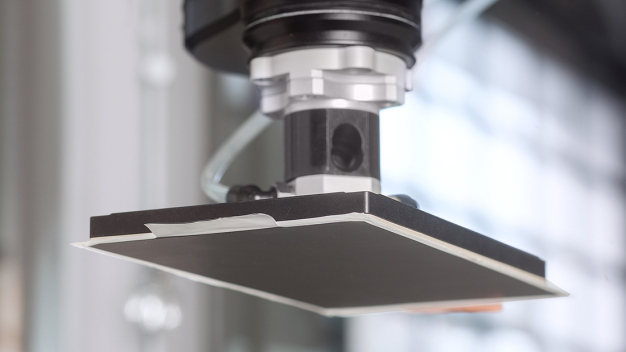
The special gripper STGG grips and places the anode without contaminating the sensitive graphite layer. (Image: J. Schmalz GmbH)
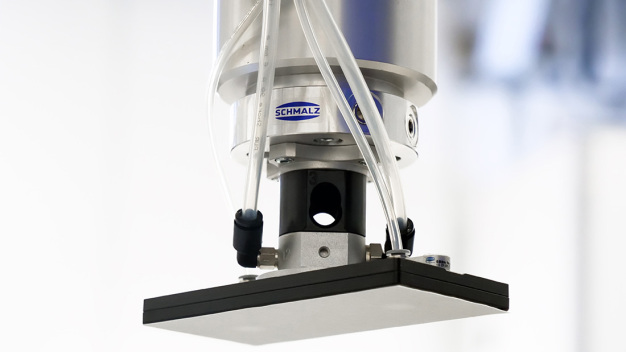
High suction power with low vacuum: The special gripper STGG is also used for handling ultra-thin separator films. (Image: J. Schmalz GmbH)
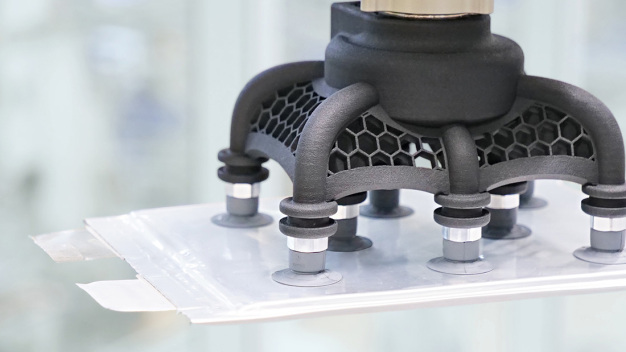
The lightweight gripper SLG with SFF vacuum grippers handles pouch cells. The textured suction cups prevent deep drawing of the housing foils. (Image: J. Schmalz GmbH)
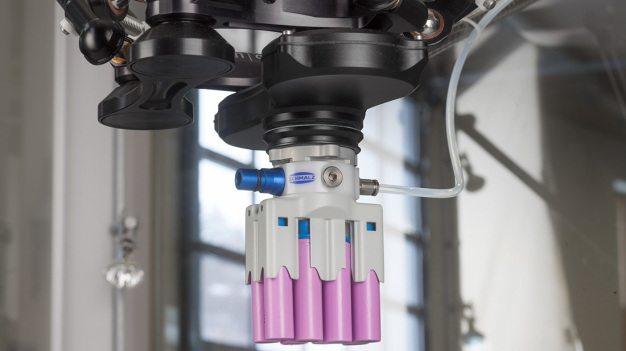
Cylindrical lithium-ion batteries are mainly used in consumer electronics and e-bikes. Schmalz develops custom end effectors – depending on the number, size, and arrangement. (Image: J. Schmalz GmbH)
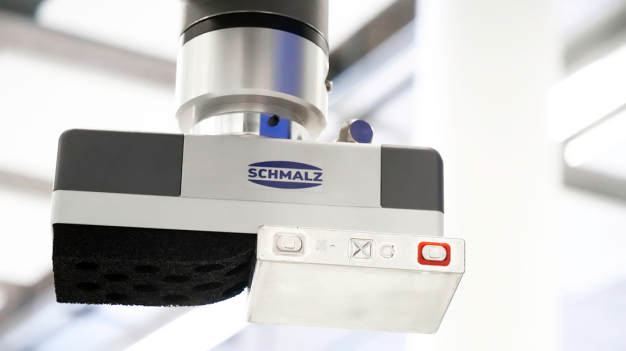
The sheet gripper FQE with energy-efficient, integrated vacuum generation is used for handling housing parts of battery cells and battery modules. (Image: J. Schmalz GmbH)

Dr. Maik Fiedler, Head of Business Units Vacuum Automation and Vacuum Handling J. Schmalz GmbH. (Image: J. Schmalz GmbH)
You are coated, rolled, and cut – the path sounds tough, as the copper and aluminum foils have to go through these processes before they can fulfill their roles as anode and cathode in a battery. The handling between these production steps must be especially gentle – how is that achieved?
Since 2009, the government has been promoting electromobility. The development and manufacturing of battery technology are also being advanced: industry and politics are working to build up and expand the know-how for development and production. The possibility of economical battery cell production in Germany was confirmed by Dr. Michael Meister, Parliamentary State Secretary to the Federal Minister for Education and Research, in 2021 at the "Battery Forum Germany". Reports from German automobile manufacturers about collaborations, their own research laboratories, and test facilities for series production confirm this. Besides use in electric vehicles, batteries are equally important for everyday life. From cordless screwdrivers to e-bikes to smartphones – the power "on the go" is no longer to be underestimated. Stationary applications are also relevant, for example, to buffer renewable energy.
Each application places its own demands on battery technology. But for manufacturing, the later use is secondary – because here, the utmost care and precision must be combined with competitive cell production. Indispensable are the small helpers that enable gentle transport of sensitive cathodes, anodes, separators, and pouch cells: special grippers and end effectors from J. Schmalz GmbH.
From Powder to Pouch
Two pastes and two metal foils form the basis of every drive battery. For the anode, a graphite paste is applied to a copper foil. The cathode consists of an aluminum foil coated with a metal oxide mixture of nickel, cobalt, manganese, and lithium. The double-sided coated foils are dried, calendered, and cut to size. They are now ready for stacking. "We recommend the special grippers STGG for this, as they can handle the sensitive foils dynamically," explains Dr. Maik Fiedler, Head of the Vacuum Automation and Vacuum Handling Business Units. The STGG alternately grips the anode, separator, cathode, and another separator to stack them. Speed is just as important as precise positioning. The gripper must leave no marks and must not contaminate the sensitive coating. "Our solution is called PEEK," says Dr. Fiedler. Schmalz manufactures a suction plate from the highly chemically resistant polyetheretherketone with many small holes that grips fully across the surface. The flat surface minimizes surface pressure. The active blow-off function of the STGG accelerates the pick & place process, while the high volume flow prevents particle residues on the electrodes. Pneumatic vacuum generation without moving parts makes the special gripper suitable for cleanroom environments.
The special gripper STGG is also suitable for separating and placing the thin separator foils. Separators are usually made from very fine-pored, flexible plastics or felts. They spatially separate the anode and cathode and prevent a short circuit. At the same time, they are permeable for the positive lithium ions that flow from the anode to the cathode during discharge and migrate back during charging. "The STGG works with a high volume flow and thus reliably grips porous materials," explains Dr. Fiedler. The ESD-compliant surface also reliably dissipates static charge, protecting against unwanted adhesion.
Cell by Cell
Once the cell stack is complete, the protruding lead wires are trimmed, and the stack is packed into a pouch foil. Fully sealed all around, the so-called pouch cell is ready for electrolyte injection. "Pouch cells are sensitive and must not be deformed by the gripper under any circumstances. They can also vary in shape depending on the application," explains Dr. Fiedler. For each geometry, the lightweight gripper SLG is suitable. Schmalz manufactures it additively after the customer has configured it online, ensuring short delivery times. To prevent the aluminum composite foil of the pouch cell from being drawn in during gripping, structured suckers from the SFF or SFB1 series are used. Both variants combine support surfaces in the form of honeycombs on the suction surface with a soft, particularly flat sealing lip. This allows gentle handling with high suction force without deforming the surface of the pouch cell.
As important as the material, geometry, and size of the gripper is the vacuum. How and where it is generated is the key to highly dynamic and simultaneously absolutely safe handling. "Our decentralized vacuum generators of the SCPM series meet all these requirements. They are compact and yet powerful," says Dr. Fiedler. They are so small that they can be mounted close to the suction cup, minimizing performance losses. The valve of the compact actuator closes when no power is supplied. This ensures the gripper securely holds the battery cell even if power fails. "Another advantage is that users can integrate special functions into the system, such as redundant vacuum generation or workpiece recognition," adds Dr. Fiedler.
The suitable handling system places the individual cells into a module, where they are connected in series or parallel. Several modules form a battery pack, which, depending on the manufacturer and vehicle category, combines fewer or more pouch cells.
Round Instead of Flat
The advantage of pouch cells is that they are flat and can thus dissipate heat well. They are versatile and make optimal use of the available volume in a battery module. Their disadvantage: the casing is sensitive and does not protect the anodes, cathodes, and separators from mechanical influences. Additionally, they may swell over time due to aging processes. Therefore, cylindrical hard-case cells are often used in some electric cars, as well as in consumer electronics, e-bikes, and tools. "For handling round cells in module assembly, we need to offer users grippers they can configure freely. Depending on the diameter of the individual cells, their arrangement, and how many are to be gripped," describes Dr. Maik Fiedler. "Thanks to 3D printing, this is easily possible from batch size one." If the user chooses suckers made from the low-adhesion special material HT1, they can grip the cells directly at the pole – the material also acts as an insulator. This ensures safe positioning of charged cells. A high volume flow is also important here for a fast and clean pick & place process. "Integrated vacuum generators excel here. The ejectors have a safety valve that maintains the vacuum even without power, ensuring safe handling," adds Dr. Fiedler. If the round cells need to be gripped along their length, Schmalz recommends the SGM magnetic gripper in the high-performance version. A permanent magnet secures the handling. "They are compact, lightweight, and still develop high holding forces," lists Dr. Fiedler the advantages. These grip as long as the battery casing is ferromagnetic.
Final – Fully Automated or Manual
Almost there now: from foils, cells are made. The cells are assembled into modules, which are then connected into battery packs and completed with cooling plates, wiring, and electronics. "Flexibility is extremely important here. The storage geometries can vary just as much as the surface structures," explains Dr. Maik Fiedler. Even if the modules are heavy, they must not be damaged by the gripper – vacuum makes this possible. The FQE flat gripper is modular and ideal for fully automated pick & place applications. The FMP flat gripper is equally versatile. Its sealing foam adapts to structured surfaces. Both ensure low operating costs with their energy-efficient, integrated vacuum generation.
For work steps that are not automated, manual lifting aids like the JumboFlex vacuum lifter relieve the operators. These can be cooling modules or cover plates that must be manually placed onto the battery housings at the end. The Safety+ control unit offers extra security: the two-hand release concept protects especially sensitive workpieces during placement. Additionally, the lowering speed can be reduced.
The battery pack is now ready for density testing – the housing and cooling system must be free of leaks. The battery management system receives the latest software suitable for the vehicle type, and the first charge/discharge cycle is carried out under strict supervision. Once wiring and electronics are in order and the battery management functions properly along with all subcomponents, the process is complete. After labeling with warning notices and ID tags, the batteries are ready for transport. "It is a long and complex journey from powder to finished energy storage. We know how to ensure safe handling at every single process step and develop tailored solutions for our customers," says Dr. Maik Fiedler.
J. Schmalz GmbH
72293 Glatten
Germany