


- Translated with AI
Doris Schulz
Component cleanliness – requirements and solutions continue to evolve
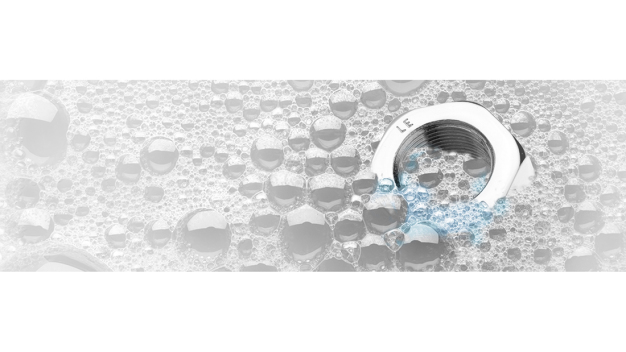
The optimal adaptation of chemistry, plant and process engineering, as well as process design to the specific task, is in every case a prerequisite for stable and economical aqueous chemical cleaning processes. (Image source: SurTEc)
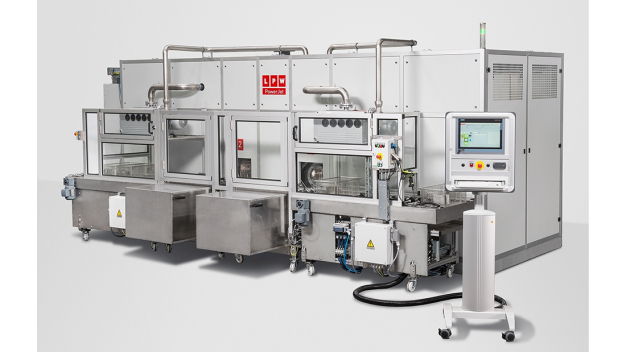
The execution of the work chamber and piping should prevent the formation of dirt nests during cleaning tasks with high cleanliness requirements. (Image source: LPW Cleaning Systems)
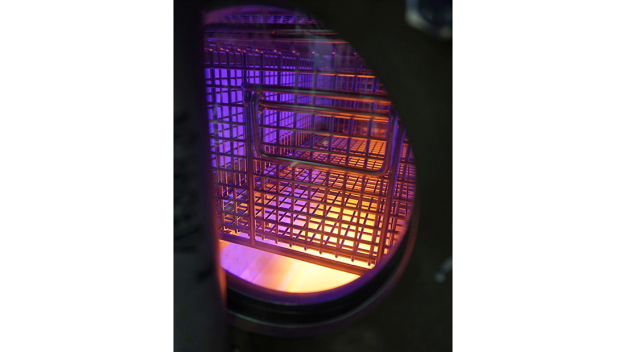
Very high requirements for particulate and film/organic cleanliness can be met with systems that combine wet chemical and low-pressure plasma cleaning. (Image source: Ecoclean)
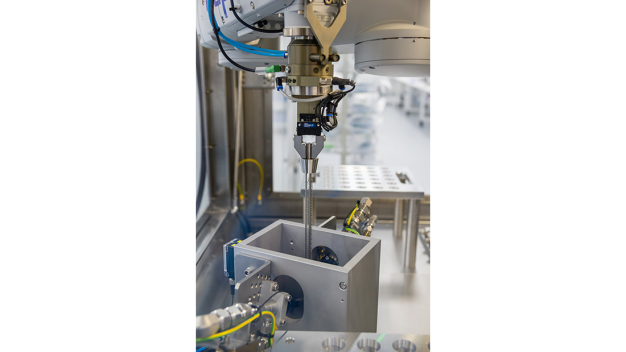
The CO2 snow jet system designed as a lock to the cleanroom is used for cleaning Nitinol stents. (Image source: acp systems)
Even before the Corona crisis, changes were already emerging in various industries and markets. These could now be accelerated and intensified by the pandemic. New tasks and requirements are also arising for the manufacturing step of component cleaning.
The COVID-19 pandemic has made it clear that global supply chains, while economically advantageous, can quickly become a major problem. Whether this will lead to a shift toward more domestically anchored value chains is still uncertain, but it is considered highly likely. Since products manufactured in high-wage European countries are usually not cheaper than those made in emerging markets, companies in machinery and component manufacturing are focusing on improving their processes.
The changes already apparent in many industries and markets before the crisis can be accelerated by the pandemic through the adoption of new technologies, procedures, and processes. Many companies used the lockdown period to advance developments. These include, among others, the use of alternative drives, modified coating, bonding, and manufacturing technologies—such as for additively manufactured parts—Industry 4.0, digital transformation, AI, energy efficiency, and climate protection. Additionally, some industries face stricter regulatory requirements, such as those introduced by the new EU Medical Devices Regulation (MDR).
Impacts on cleaning technology
These trends result not only in new and changing challenges for production but also for the component cleaning step. Alongside traditional cleaning of particulate contaminants from subtractive and formative processes, the removal of filmic/organic, inorganic, and partially biological residues, as well as fine-particulate contamination, is increasingly coming into focus.
Cleanliness – along the manufacturing chain
The high cleanliness standards required for components—such as those in medical technology, optics, micro-, sensor, and laser technology, the pharmaceutical industry, as well as electronics and semiconductor suppliers—can only be met if the components and parts start in an appropriate initial condition. Key aspects include the proper execution and quality of upstream processing steps, the avoidance of cross-contamination, surface finish quality, and deburring. Component cleanliness thus becomes a criterion throughout the entire manufacturing chain. Another important factor is adapted handling and environmental conditions.
Fine cleaning in aqueous chemical processes
For process-safe achievement of the required cleanliness specifications in aqueous chemical methods, the optimal adjustment of chemistry, plant and process engineering, and process design to the specific task is crucial. This includes, among other things, the use of procedures such as multi-frequency ultrasound and cyclic nucleation for geometrically complex parts. To meet very high demands for particulate and filmic/organic cleanliness, systems are also available that combine aqueous chemical processes with low-pressure plasma cleaning.
Whether the fine cleaning is performed in a batch or chamber system, the tanks or chambers and piping should be designed to prevent the formation of dirt nests and to reliably remove detached contaminants. When preparing and processing media, it must be ensured that they meet the quality requirements for purity, for example through the use of ultrapure water.
For systems used in aqueous chemical cleaning, equipment for continuous monitoring and recording of system and process parameters is often standard. Measurement systems for permanent inline monitoring and control of cleaning wheels enable not only precise documentation of conditions during cleaning but also demand-based, automatic dosing of cleaners. All recorded data can also be transmitted via interfaces to a higher-level MES system.
A newly developed solution also allows for the measurement of incoming contamination, so that the cleaning process can be adjusted accordingly or, if a maximum value is exceeded, the system automatically stops and issues a notification.
Full-surface or partial dry cleaning
With the growing trend toward individual part cleaning, dry cleaning methods such as atmospheric pressure plasma and CO2 snow jet cleaning are increasingly finding applications—both for full-surface and partial removal of contamination. The advantage of both methods is that they can be easily automated and integrated into linked production lines or Industry 4.0 manufacturing environments.
Atmospheric pressure plasma cleaning is used to remove thin organic residual contamination. The use of a so-called "cold" plasma source also allows treatment of temperature-sensitive substrates. During the plasma process, the surface is simultaneously cleaned and activated. The latter is based on the physical and chemical reactions of the process, which increase the surface energy.
CO2 snow jet cleaning can reliably remove both particulate and filmic/organic contaminants. Another application is simultaneous deburring and cleaning of hard and brittle plastics such as PEEK and PPS. A new development in nozzle technology now enables the generation of a pulsed jet. The pulsed snow-jet air stream has higher kinetic energy compared to continuous jets, resulting in optimized cleaning and deburring effects. Component-specific monitoring of the jet quality can be performed with a sensor system directly on the workpiece. The measured values can be transmitted as digital information to higher-level systems.
parts2clean – International leading trade fair for industrial parts and surface cleaning
What processes can reliably and cost-effectively meet the high cleanliness requirements of various components? What technologies are available for dry and partial component cleaning? How can cleaning processes be efficiently integrated into fully automated manufacturing environments? How can the achieved cleanliness be verified and documented? Answers to these and many other questions related to industrial parts cleaning are provided by parts2clean. The international trade fair for industrial parts and surface cleaning will take place from October 5 to 7, 2021, at the Stuttgart exhibition grounds (Germany). It offers comprehensive information on cleaning systems, procedures, and media, quality assurance and testing methods, cleaning and transport containers, disposal and recycling of process media, handling and automation, services, consulting, research, and technical literature. The three-day specialist forum at parts2clean also imparts extensive expertise on cleaning.
Deutsche Messe AG
30521 Hannover
Germany



