


- Furnishing & equipment
- Translated with AI
Joachim Ludwig
Cleanroom suitability as a quality parameter – what does the result of these investigations tell us
In most companies, investigations into cleanroom suitability are a secondary topic outside of their core competencies. For non-experts, therefore, the temptation is great to rely on the common information regarding cleanroom suitability.

Image 1
Image 2
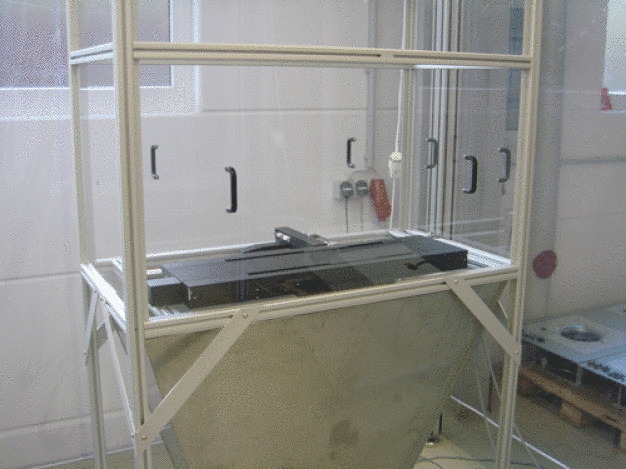
Image 3
In recent years, cleanroom compatibility has increasingly become a fixed quality parameter for machine and component suppliers. This quality feature is found in more and more products, whose use can take place in the cleanroom and whose suitability for this purpose should be documented. This quality seal indicates that a product meets certain requirements regarding the release of contamination of particulate or gaseous nature.
However, all users should be aware that this quality seal is strictly tied to the conditions present during testing. Furthermore, the question arises as to what extent a mechanical product should conform to a cleanroom class. This, unrelated property, is often misinterpreted in the argumentation. At this point, the topic of cleanroom suitability and its interpretation should be presented. (see Figure 1)
Cleanroom suitability and/or purity suitability
The guideline VDI 2083-9.1 "Purity suitability and surface cleanliness" points out the differences between cleanroom suitability and purity suitability. (The author notes that, in his opinion, the previous guideline VDI 2083-8 "Cleanroom suitability of equipment" described the difference in a more detailed manner.) To put it simply, one can say that cleanroom suitability describes the influence of a machine or component on the air cleanliness class of the cleanroom, while purity suitability describes the influence on the respective product. Both factors are important, but greater emphasis should be placed on purity suitability. Nonetheless, the term "cleanroom suitability" is often used without differentiation. This differentiation becomes important when the parameters determined are relevant for the facilities or production area. Cleanroom suitability also plays a role in production, especially concerning cross-contamination issues. Cleanroom suitability is also considered a part of purity suitability. From this perspective, both areas should always be evaluated together, without neglecting the differentiation.
Cleanroom compatible according to ISO
Often, product specifications, data sheets, or brochures contain the phrase "Cleanroom compatible Class ISO 4 according to ISO 14644-1" to indicate machines or components intended for use in the cleanroom. What does this mean?
- The machine/component can be used in the cleanroom classified as ISO 4 without concern.
- The product produced with this machine/these components is not exposed to a worse environment than the air cleanliness class described by ISO 4.
- The machine has the cleanliness class ISO 4 according to ISO 14644-1.
All these interpretations are found in practice, among other places. But what do they mean specifically?
- In the first point, the classic cleanroom suitability is described. This means that the machine shows no point where more particles are released into the surrounding cleanroom than the values determined by volumetric air measurements and classified into the ISO 4 class. Questions remain, however. One of these is how many of these machines can be used in the respective cleanroom while still maintaining the classification of the room.
- Point 2 contains information about the purity suitability of the product environment. Ultimately, only the product counts, not the cleanroom. The cleanroom is merely a means to an end. If it is possible to keep the immediate product environment clean, then the cleanroom plays only a secondary role. Moreover, the issue of purity suitability in the semiconductor industry has been addressed in a practical manner through acceptance tests.
- Regarding point 3, it can only be said that no machine/component can possess an air cleanliness class.
Measurement protocol and measurement conditions
The protocol underlying each certification includes details about the measurement conditions. These are important to compare with one's own conditions under which the machine/component is to be used. It is not only about environmental parameters like temperature and relative humidity; the key information relates to the process itself under which the cleanliness suitability tests were conducted. In cleanroom technology, three qualification levels (states) are distinguished:
- - As built – the cleanroom has been constructed, no machines or personnel are present during measurement, the cleanroom is operational.
- At rest – the cleanroom is equipped with all machines and systems, it is in operation, the machines and systems are running (idle), and no personnel are present.
- In operation – the cleanroom is fully operational with all machines, systems, and personnel, and production is ongoing.
Similarly, these states can be applied to purity suitability testing. Usually, the "at rest" state is used, as the specific use cases and products are too diverse. It becomes apparent that there can be a gap between the measurement and the actual application case. Additionally, some marketing departments may be creative, as was revealed to the author in a specific case. His research showed that while the ISO 1 classification was correctly indicated in the data sheet, the results of other measurement points for that component were concealed (they were worse).
In another case, a transfer component was accidentally only measured in the initialization mode, as revealed by a re-examination by another service provider. The results at actual process speed were significantly worse. This led the end customer to choose a different product.
So, what does the statement "Suitable Class ISO 4" ultimately tell us? – It indicates that, under certain conditions, particle concentrations were measured at most measurement points that correspond to the air cleanliness class ISO 4 according to ISO 14644-1. It is not the machine that meets the air cleanliness class, but the measured particle concentration. It informs the user of this machine/component that they have likely found a product suitable for their application, but this suitability should be confirmed by comparing their operating conditions with the protocol accompanying the certificate.
Important questions remain open:
- - How old is the certification? All certificates are subject to validity periods. This is necessary to ensure that product changes or modifications in the manufacturing process do not compromise the quality regarding purity suitability.
- How does the long-term behavior regarding purity suitability look? Usually, measurements are performed on brand-new machines/components. There are few cases where long-term behavior has been studied.
- How many particles does the machine/component emit in total? This question becomes relevant when machines and components are to be compared directly. It is especially interesting if, alongside other relevant parameters, particle emission is an additional decision criterion. (see Figure 2)
Holistic method
In VDI 2083-9.1, this type of measurement is not considered with the necessary care, according to the author.
The holistic method measures particle emission per unit of time. The disadvantage is that the results cannot be directly reflected in any classification as presented in ISO 14644-1. This means that the holistic method should always be considered in conjunction with the local measurement method, where measurements are taken at defined points. (see Figure 3)
The measurement setup involves positioning the object to be measured in a measurement chamber filled with pure air, and measuring the particle concentration at an air outlet (assuming an approximate uniform distribution). Additionally, the volumetric flow rate at the outlet is determined. Multiplying both values yields a particle flux.
Particle concentration P/m³ multiplied by the volumetric flow rate m³/s results in particle flux P/s:
P/s = (P/m³) / (m³/s).
A simple example illustrates why it can be useful to choose the holistic method. Suppose two different manufacturers have agreed on five measurement points. For Manufacturer 1, the local measurement method results are (0 – 0 – 200 – 0 – 0). According to VDI 2083-9.1, this means that the particle emission of this run corresponds to a classification associated with the highest measured value, 200. For Manufacturer 2, the results are (100 – 100 – 100 – 100 – 100). According to the guideline, this corresponds to a classification associated with the highest measured value, 100. Although Manufacturer 2's run emits significantly more particles, it receives a better classification. This contradiction can be resolved using the holistic method.
Further literature:
VDI 2083-8: Cleanroom suitability of equipment (withdrawn)
VDI 2083-9.1: Purity suitability and surface cleanliness
ISO 14644-1: Classification of air cleanliness

COLANDIS GmbH
Im Camisch 34
07768 Kahla
Germany
Phone: +49 36424 76940
email: info@colandis.com
Internet: https://www.colandis.com