


- New building
- Translated with AI
Cleanroom construction at the Zweibrücken campus
Investment secures first-class training and research opportunities
Work in the cleanroom
Students in the cleanroom
Without micro- and nanotechnology, for example, cars, smartphones, or life-saving medical technology would be unthinkable and would not function either. At the Zweibrücken campus of Kaiserslautern University of Applied Sciences, various bachelor's and master's degree programs are offered that thoroughly prepare students for use in this key technology of the 21st century. Now, the representatives of this scientific field and especially the students have received good news: after years of preparation, plans for the new building of the so-called "cleanroom" at the Zweibrücken campus have become concrete. The State Building and Property Management Agency (Landesbetrieb LBB) invited users and planning offices to an event in mid-January, which essentially marked the kickoff for the planning of the new building.
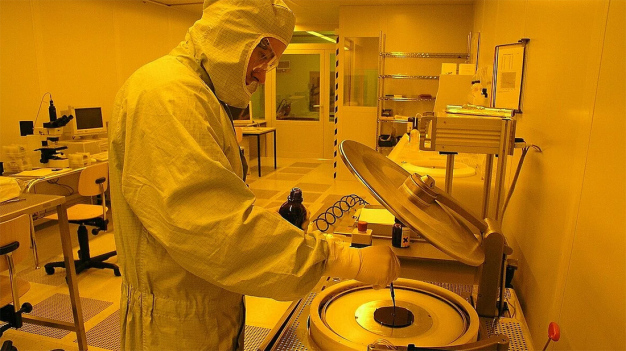
A cleanroom is a room in which the concentration of airborne particles is kept as low as possible. Cleanrooms are required for specialized manufacturing processes—primarily in semiconductor fabrication and the production of so-called micro-electro-mechanical systems (MEMS)—where particles present in normal ambient air would disrupt the structuring and thus the functionality of, for example, integrated circuits or sensors at the sub-micrometer level. Other applications of cleanrooms or cleanroom technology include optics and laser technology, aerospace engineering, biosciences, medical research, as well as the sterile production of food and pharmaceuticals.
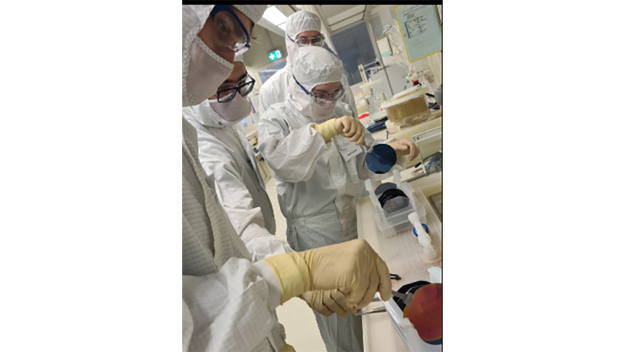
At the Zweibrücken campus, the cleanroom has been used since the late 1990s for training students in the Department of Computer Science and Microsystems Technology (bachelor's and master's programs in Micro- and Nanoengineering, Biomedical Engineering, Systems Engineering, Applied Life Sciences), as well as for extensive research work by the research focus on Integrated Miniaturized Systems. Currently, students are learning, for example, how to build a pressure sensor for automotive technology or a diagnostic chip for medical technology. Doctoral researchers develop sensors and lab-on-chip systems for drug analysis and cell experiments to test substances for cancer therapy or to investigate the development of Alzheimer's disease. Additionally, materials for magnetic sensors and systems for measuring humidity for body-related sensing are being developed together with industrial partners.
However, technological progress and the passage of time do not spare a cleanroom, and the equipment of the current facility has become outdated. The university is therefore very pleased that the new construction of the cleanroom will not only preserve the existing training and research capabilities but also enhance and improve them.
"The new building will not only create a unique opportunity for students and researchers to continue learning and developing innovative things, but it is also a political milestone for the Zweibrücken university campus: it will be the first building at the university where sustainability and climate neutrality are given high priority," explains Prof. Dr. Monika Saumer, who has been professionally overseeing the large project on behalf of the university, highlighting an additional special aspect of the new construction.
The building will implement an integrated, sustainable, and energy-efficient building concept through the application of the Sustainable Building Assessment System (BNB) in connection with lifecycle-oriented planning. For this purpose, durable, low-emission, and low-pollutant building products are to be used, as well as renewable raw materials and recyclable components. Buildings play a particularly important role in climate protection because they account for a significant share of total energy consumption and greenhouse gas emissions.
University President Prof. Dr. Hans-Joachim Schmidt also expresses enthusiasm about the start of planning for the new building: "Only a few universities of applied sciences in Germany have a facility like the new cleanroom. This not only sustainably secures the future viability of micro- and nanotechnology at our university but also gives us a unique selling point that makes our programs in Zweibrücken especially attractive for students, teachers, and researchers. We can thus continue to offer technological key competencies in Zweibrücken, which have gained renewed importance in light of current developments in the chip industry."
The new building will be constructed directly adjacent to the existing cleanroom, southeast of Building L, on the site of the former sports field. However, it will still take some time before teaching, learning, and research can be conducted in the new cleanroom: as the next step, the Kaiserslautern branch of LBB will prepare a budget document for construction in close coordination with the university by early 2024 at the latest. Only after its approval will reliable figures regarding construction duration and costs be available.
Hochschule Kaiserslautern
67659 Kaiserslautern
Germany