

- Translated with AI
Better to plug in than to screw in
Plug-in modules increase flexibility and safety during changes in switchgear
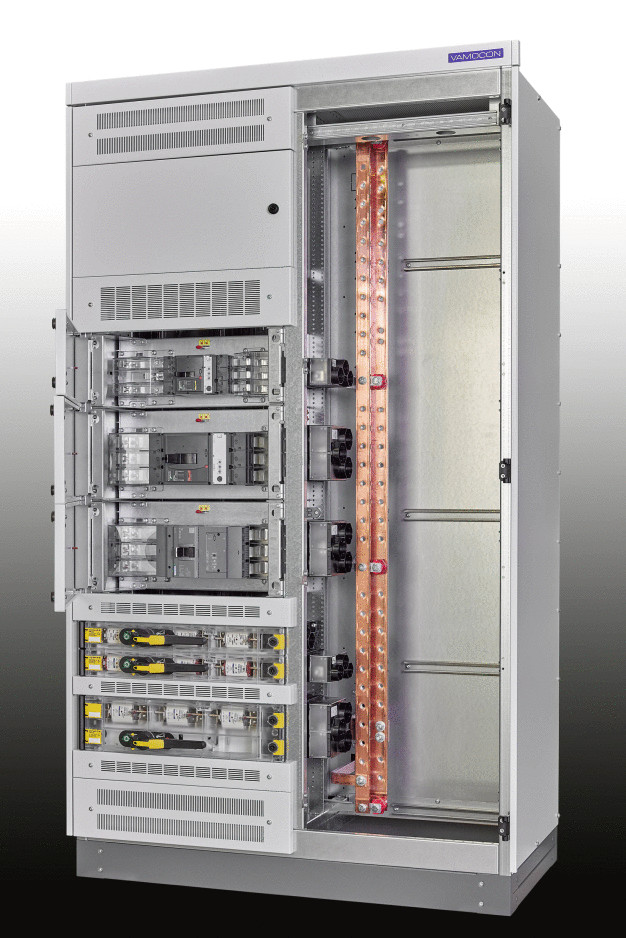
The device field horizontally allows the combination of plug-in modules and load disconnect switches with fuses. (© SEDOTEC)
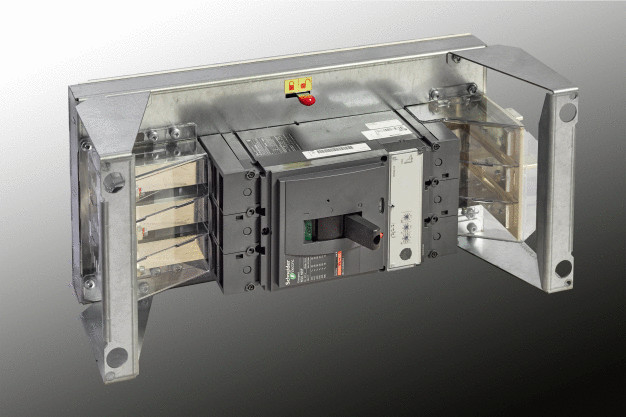
SEDOTEC has equipped the new plug-in module with a forced release for the built-in compact circuit breaker. (© SEDOTEC)
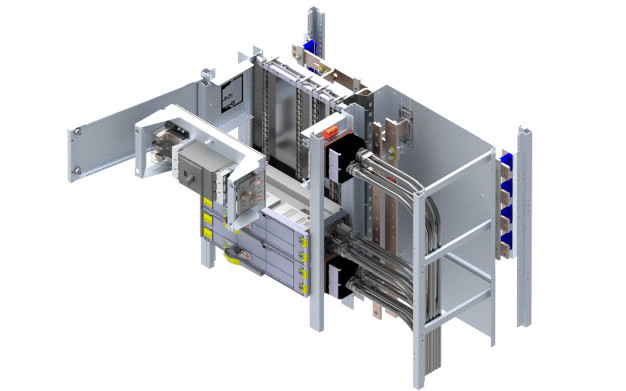
The plug-in module can be inserted and removed while the main circuit cables remain connected. (© SEDOTEC)
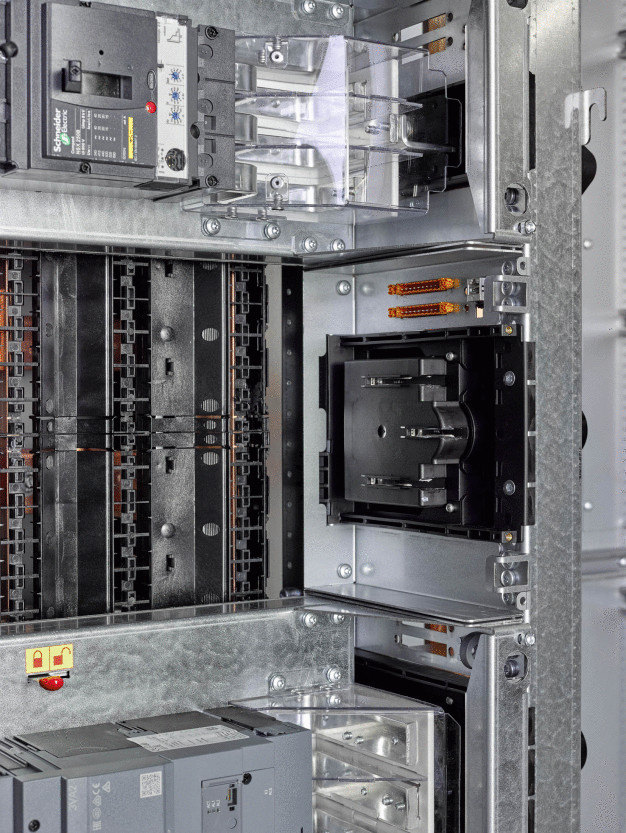
Handling of the plug-in module with contact and tamper-proof cover in removed state. (© SEDOTEC)
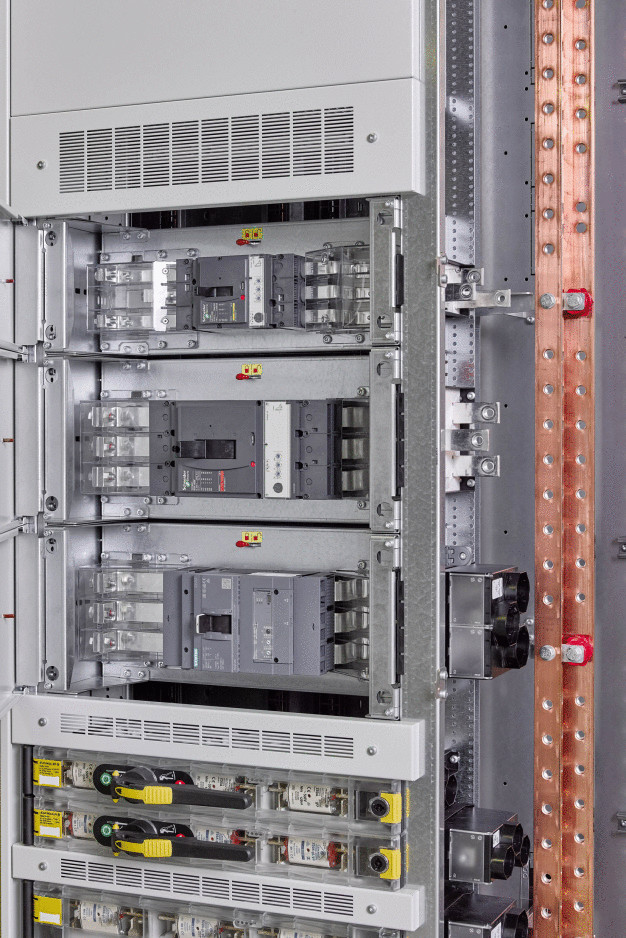
Plug-in module with compact circuit breaker installed in the field. (© SEDOTEC)
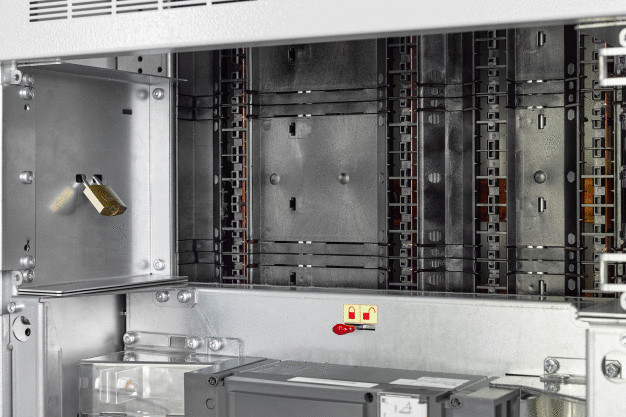
In openings of the side guide, a curtain lock can be installed. This secures against unauthorized insertion of the plug module. (© SEDOTEC)
Flexibility and changes are now standard requirements in companies. When machinery and manufacturing processes are repeatedly modified, devices in the power supply switchgear often need to be replaced or modernized. However, because electrical energy must always be available, switching off the entire switchgear is almost unthinkable. The same applies to regular maintenance. One solution is plug-in and removable switching devices that prevent removal under load through a forced release. And if this is possible with both fuse disconnectors and circuit breakers, all the better.
"DIN EN 61439-2, in its section 8.5.2, which governs removable parts and inserts, will become increasingly strict regarding the interruption of the main circuit when inserting and removing," explains Steffen Vree, Head of Product Management Vamocon at Sedotec. "As more and more removable parts are offered for switchgear in the future, this safety aspect rightly remains a focus," Vree continues. Modern plug-in modules with circuit breakers address this important requirement for companies as operators. They utilize the advantages of both fixed installation and plug-in technology. They are cheaper than the plug-in technology but significantly more flexible than fixed installation regarding later modifications during operation. And all this without compromising operator safety.
Flexibility and quick action increasingly demanded
Processes and workflows in manufacturing companies are becoming more comprehensive and complex, and often cannot be interrupted — for example, to shut off energy for changes in machinery or maintenance. The high availability of electrical energy is natural for companies — sometimes even vital in times of just-in-time delivery commitments. At the same time, higher flexibility is required in manufacturing or administrative processes because changes are now the rule rather than the exception. Systems are expanded or modified, machines are relocated, modernized, or brought into operation anew. And all this must happen without shutting off power. Plug-in modules, such as those offered by Sedotec, provide a practical and safe solution.
The Ladenburg-based specialist pursues the idea of a platform strategy for applications in demanding energy distribution with high availability and operator safety with its new horizontal plug-in device field (GWA). Users can safely use, in the same system and field, non-fused devices (compact circuit breakers) and fused devices (JEAN MÜLLER SASILplus) up to a rated current of 630 A in combination. Thanks to the plug-in technology, devices can be quickly and safely replaced or retrofitted without switching off the switchgear. The modular design offers great freedom and high flexibility. "This fulfills an important market demand for a quick, touch-safe setup and deployment of compact circuit breakers in conjunction with fused switching devices," assures Vree, adding: "Both in the operating position and in the removal position (plug-in module removed from the field), all voltage-carrying parts are already covered in a standard that is touch-safe, significantly increasing operator safety."
Switchgear no longer needs to be switched off
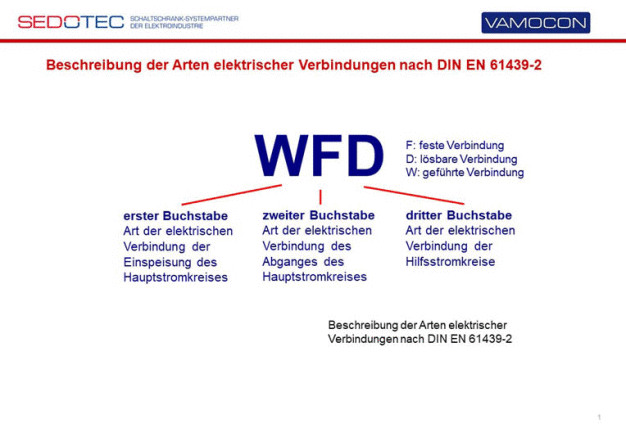
The plug-in modules are equipped with a forced release for the installed compact circuit breaker. This prevents the plug-in module from being inserted or removed with the circuit breaker switched on, i.e., possibly under load. The entire switchgear can remain energized. The electrical connections of the main and control circuits are categorized as WWD (see info box). Access to the main circuit is via contacts on the back of the module leading to the field distribution bus. The contacts for the connected cables are on the right side. Both contact rows are securely engaged when inserted. The plug-in module can also be configured as a fixed connection (F) on the outgoing side, in contact type WFD. "But the guided, plug-in connection type offers the greatest advantages," emphasizes Sedotec Development Manager Volker Kirchhoff. The connection to the control circuit in the right guide rail is plug-in and can be easily released by hand (D). Openings are prepared for terminals, RJ45, or USB connectors, depending on the switchgear manufacturer. This perfectly supports the connection of communication-capable circuit breakers. Additionally, current transformers can be slid into and wired via the mounted copper busbars in the plug-in module. The openings are then sealed with polycarbonate plates.
Because the supply and return of the main circuit are now only connected via plug-in, the time-consuming screwing and loosening of connected cables during a module change is eliminated. Vree knows exactly what he’s talking about: "Anyone who has ever screwed or loosened six cables with 185 mm² each knows how quickly time passes." Limited space conditions in a field also make access more difficult. "With our solution, it's done in seconds," assures Kirchhoff. Overall, with the GFWA platform, replacing a compact circuit breaker takes only a few minutes, whereas it previously could take an entire day.
Quick and safe installation of circuit breakers in plug-in modules
In the widely used previous solutions with cassettes or plug-in mounting plates, the contact set is not always matched to the phase center distance of the circuit breakers. The connection wiring must also be added, and the installation of external current transformers is complex. "All of this involves enormous effort, which no one wants today," says Vree. "This is no longer modern and often not compliant with standards," the product manager adds, because a forced release is only possible — if at all — via rotary drives on the door. The new plug-in modules include all components needed for installing the respective circuit breaker. The combination possibilities of the plug-in modules in the field have been tested in extensive heating tests for their rated values. Similarly, the plug-in modules have been successfully tested for a conditional rated short-circuit current of up to 110 kA.
Considering arc fault protection as well
Furthermore, it is important for removable parts and inserts that an installed active arc fault protection system does not trigger incorrectly when the circuit breaker trips due to a short circuit. Manufacturers who can provide reliable statements on this offer safety. Knowing this, Ladenburg-based Sedotec had their plug-in modules in the VAMOCON switchgear system tested with the active arc fault protection system DEHNshort for false trip safety — with success.
Additionally, the manufacturer tested the behavior of the plug-in modules under arc fault conditions. For this, a ignition wire was attached to the plug-in module to initiate an arc fault. Due to the insulation — everything is finger-safe IP2X all around — the ignition wire could only be attached to the outgoing contacts of the main circuit. The circuit breaker reliably shut off the arc fault. All requirements of arc fault class B (criteria 1 to 6) according to DIN EN 61439-2 Appendix 1 were met.
Ready for the future with a platform
The new, modern plug-in modules make the extraordinary routine for operators, because plugging in instead of screwing saves time and costs and offers high flexibility. Moreover, the platform concept allows for low initial investment in the switchgear, as devices can later be exchanged or retrofitted according to changing requirements.
SEDOTEC GmbH & Co. KG
68526 Ladenburg
Germany