




- Translated with AI
Another step towards better infection prevention
Researchers at the Hohenstein Institute are developing new methods to assess the practical applicability of antimicrobial textiles.
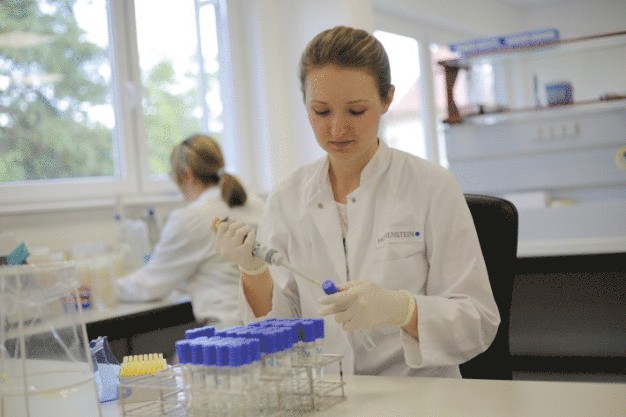
New realistic test models assess the effectiveness of antimicrobial textiles, among other things, by using representative pathogens. © Hohenstein Institute
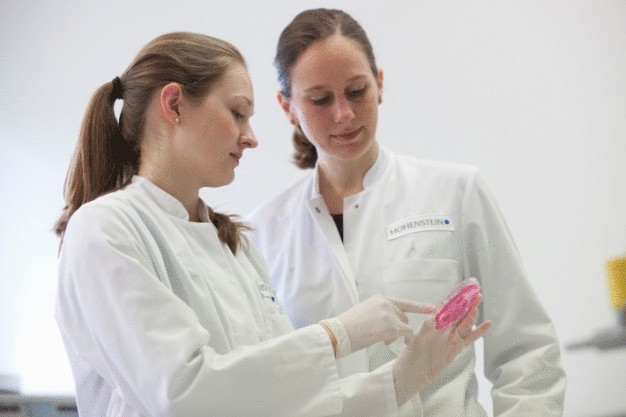
New research findings from the Hohenstein Institute can help to specifically develop antimicrobial products to break infection chains. © Hohenstein Institute
The transmission of germs in hospitals or care facilities can pose a serious threat to patients. Approximately 20 to 30 percent of the 400,000 to 600,000 hospital infections occurring annually in Germany are preventable.* The use of antimicrobial-equipped materials can contribute to this.
With the successful completion of the research project "Study on Practicality and Benefits of Antimicrobial Textiles in Care Situations" (AiF No. 17832 N), the researchers at the Hohenstein Institute developed testing models to evaluate the effectiveness of antimicrobial textiles and their suitability for practical application. To keep these models as realistic as possible, the scientists drew on their experience with standard testing methods according to DIN EN ISO 20743. In practical use, conditions are different and often more severe than in laboratory testing. Therefore, standard requirements for measuring antimicrobial effects are not capable of capturing the relevance and effectiveness in real-world settings. When conducting their studies, the researchers considered various parameters such as representative test microbes, contact times, microbe-stabilizing bodily fluids, and the wash durability of the textile equipment. In simulated infection chains, textiles were contaminated with common pathogens in typical quantities. To objectively assess how equipped textiles perform, the Hohenstein experts conducted tests both with the treated samples and with untreated control textiles.
Study Results
The study shows that antimicrobial textiles of the latest generation can lead to a reduced microbial load and transmission to other points in the infection chain: bacteria are killed, viruses are inactivated, and fungi have their growth inhibited. The data collected were summarized in an application matrix. The evaluation demonstrates that the interplay of fiber properties, treatment, and biozid active substances significantly influences the antimicrobial effect in practice. Based on these results, the Hohenstein experts can calculate infection risks depending on the application, based on derived exposure levels of pathogens.
The new, realistic, and practical testing models can support the textile industry in optimizing antimicrobial materials for specific applications. Furthermore, the research project shows that textiles equipped in this way can additionally contribute to improving hygiene, for example in hospitals and care facilities, thereby supporting infection prevention.
*Source: Charité – Universitätsmedizin Berlin website, as of March 10, 2016
Hohenstein Laboratories GmbH & Co. KG
74357 Hohenstein
Germany



