- Cleaning | procedures, devices, agents, media (Wipers, Swaps,...)
- Translated with AI
Gerhard Koblenzer
A cleanroom alone does not ensure cleanliness
Industrial cleaning technology in high purity environments
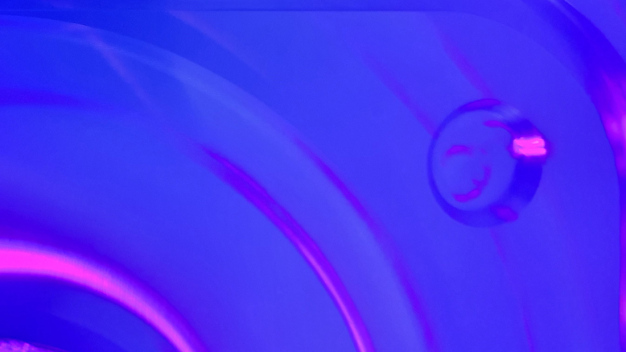
Changed cleanliness requirements in type and quantity require different testing methods. In addition to technically complex and time-consuming procedures (e.g., XPS, ATR/FTIR, TOF-SIMS, etc.), UV light inspection has proven to be a quick method that makes even the smallest particles or fibers visible. (Photo/Graphic: LPW)
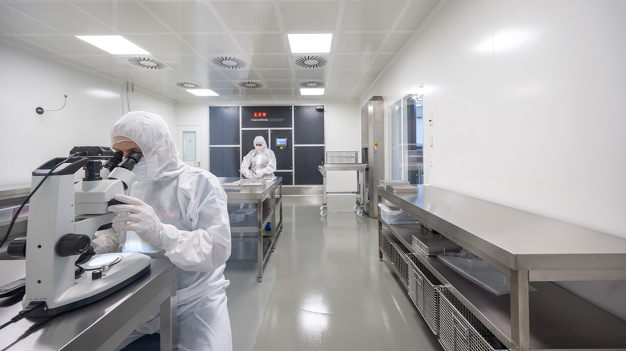
Insight into the TDZ: Cleaning components before or within the cleanroom has become routine in recent years. (Photo/Graphic: LPW)
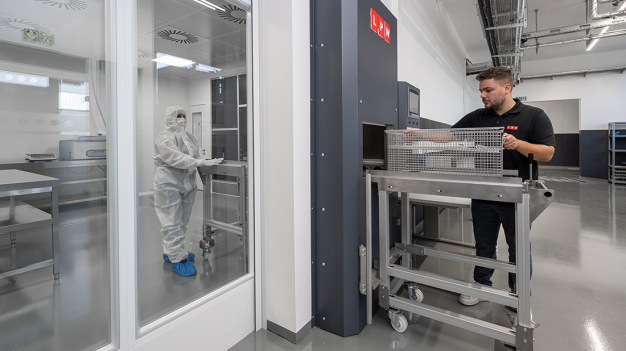
Nothing enters the cleanroom without pre-cleaning to avoid any contamination. (Photo/Graphic: LPW)
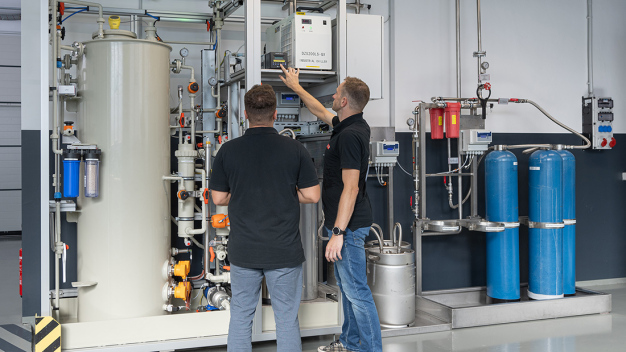
The LPW pure water supply unit for the final rinses in the TDZ represents another important component in ensuring process quality. (Photo/Graphic: LPW)
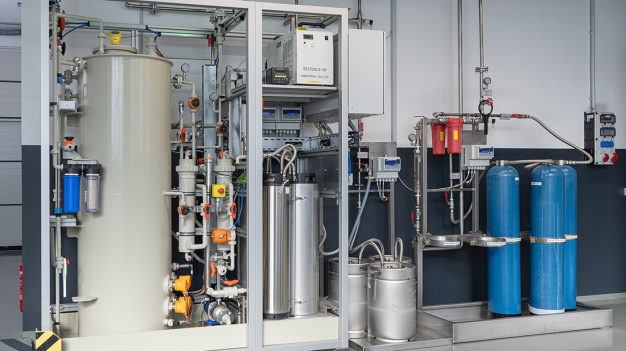
The LPW pure water supply unit for the final rinses in the TDZ represents another important component in ensuring process quality. (Photo/Graphic: LPW)
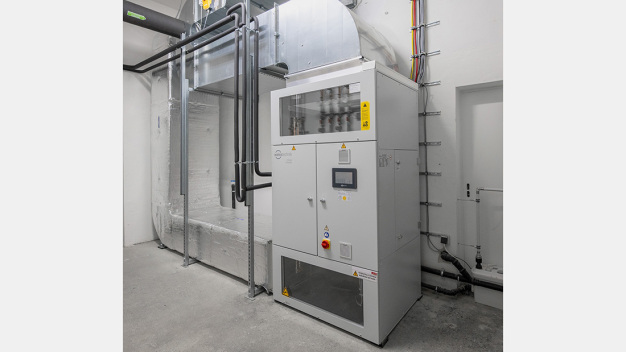
The quality of the cleanroom air concerning particulate contamination and turnover frequency is maintained in a recirculation filter system and controlled via process data monitoring (including particle counters). (Photo/Graphic: LPW)
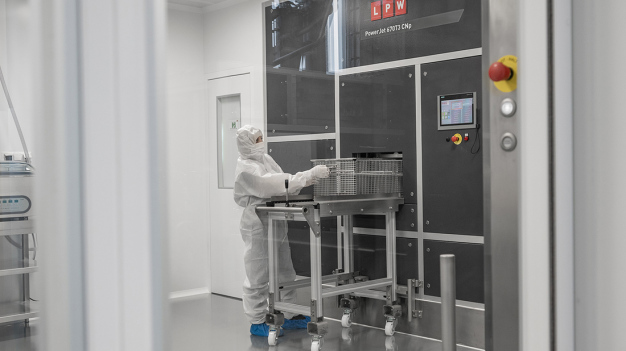
The cleaning system can contribute to recontamination, not only during the cleaning process itself, but also through unintended cross-contamination of the product. The maintenance area is also often a source of this and is therefore always placed outside the cleanroom in LPW systems. (Photo/Graphic: LPW)
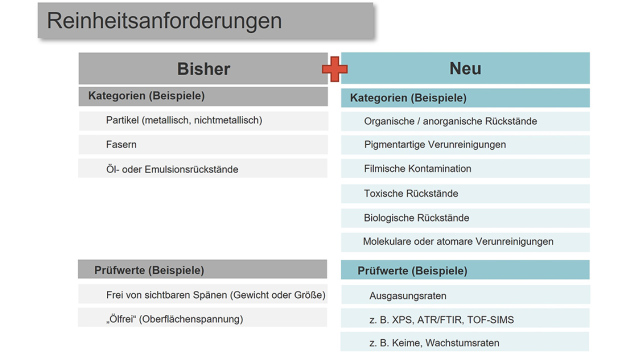
Diagram (Photo/Graphic: LPW)
When it comes to industrial cleaning technology, applications in or before cleanrooms are increasingly being discussed — and not only in the medical and semiconductor segments. However, there is sometimes the impression that simply combining a cleaning system with a cleanroom provides the solution for the ever-increasing demands on the level of technical cleanliness. That is not the case. A cleanroom alone does not make things clean. It is merely a component of a complex overall concept.
The industry is undergoing change. Although some cleaning solutions currently seem sufficient, they are gradually reaching the limits of their capabilities because they do not consider certain logical-analytical approaches. In plain language, this means that if they are not aligned with the overall process chain and environmental conditions under the aspect of the respective cleanliness specifications — in every single, even the smallest step.
Change at all levels
To understand this, a brief look back helps: In the past, there were the classic tasks, for example in the machinery construction and automotive powertrain sectors. And on the other hand, those with the highest cleanliness requirements, associated with corresponding regulations and validation procedures (for example in medical devices, optical systems, and wafer manufacturing). However, in recent years, these two branches of industrial cleaning technology have essentially merged. Especially in 2019/2020, this development accelerated rapidly due to structural restructuring in nearly all industrial sectors worldwide. This means that the entire industry now has to deal with new technological requirements and is searching for orientation together with users. Sometimes also driven by the desire for quick solutions.
But speed alone is not enough. New products and manufacturing methods demand a changed and more conscious view of technical cleanliness in all production processes. Whereas in the past, particles and fibers were the focus, today organic or inorganic molecular or even toxic contaminants dominate, affecting the quality of environmental conditions as well as detection methods. Additionally, the geometric complexity of components in the fine and ultra-fine cleaning segment has increased significantly. Furthermore, component sizes vary from micro to XXL components for semiconductor lithography systems. And whereas it was mostly large series in the past, today it is more about small series or individual parts.
Furthermore, the boundary parameters have changed:
- The components in their initial state are often significantly cleaner than the output quality of known applications (e.g., in traditional automotive manufacturing).
- The "new" contaminants are often not quickly detectable or visibly obvious.
- The process media (gaseous or liquid) as well as environmental conditions have an immediate influence on the quality of the component throughout the process and can lead, among other things, to re- or cross-contamination.
Requirements for manufacturing and handling
To meet the current cleanliness requirements in manufacturing and handling within high purity environments, unwanted contaminants in the process chain must be avoided as early and systematically as possible before final cleaning. In practice, this means that, besides choosing the appropriate cleaning technology, pre-processes, environmental conditions, media used, and subsequent applications must be thoroughly planned. This requires a changed mindset in dealing with the topic and a corresponding overall concept. Because a simple combination of individual technical capabilities, such as linking the cleaning system with water treatment and a "clean" environment, is not sufficient. Rather, a finely tuned coordination of individual aspects is needed, aiming to achieve a clean surface at the final point of use.
The cleaning system itself is seen as the link between the pre-process and the point of use, with suitable environmental conditions (e.g., in a cleanroom or in appropriate packaging). Besides creating a higher level of cleanliness, it also has the transfer task of gradually ensuring an environment of increasing purity in subsequent steps, avoiding cross- and re-contamination. As the cleanliness level increases during the cleaning process, the quality of the environment and media must also be adjusted to prevent deterioration — right into the cleanroom. The cleanroom then has the task, both technically and organizationally, of maintaining the achieved standard of the component all the way to the point of use.
In practice
The Netherlands is an important location for European high technology. For example, the ASML Group manufactures EUV lithography systems for the semiconductor industry there. Two suppliers from this environment approached LPW because their production was to be transitioned from Grade 4 (comparable to traditional particulate fine cleaning tasks) to Grade 2 (with an option for Grade 1). This means that the filmic and fine particulate conditions of fine and ultra-fine cleaning are at the forefront, with high requirements for the purity of environmental parameters.
At the customer LowersHanique, it was about high-quality glass and metal components. At AAE, it involved a variety of structural parts (mainly aluminum) with large variance in parts and immense complexity. In the second case, the focus was on difficult geometric shapes, through-holes, blind holes with diameters of 2 to 6 mm (with and without threads), and sensitive surfaces. Both customers initially wanted to check whether cleaning quality could be achieved without damaging the parts and how re- or cross-contamination could be avoided. Preliminary tests with other equipment manufacturers had so far yielded no satisfactory results in this regard.
So, how to proceed? From the very beginning, intensive co-engineering took place. Projects of this kind are not self-running for either side and require in-depth discussions about processes, materials and their properties, handling, and quality assessment. Each individual cleaning step, i.e., washing mechanics, rinsing, and especially drying, must be tested and evaluated for its positive and negative influences on the desired outcome. Additionally, the connection to pre- and post-processes must be planned. The transition into the cleanroom must be carefully coordinated, and this long before a final purchase decision is made. Openness and trust in the involved persons and their environment are prerequisites. It is primarily about a new cleaning system, but actually about implementing higher quality levels in production.
After intensive testing in LPW’s cleanroom-based test and service center (TSC) including contract cleaning, and the development of task-appropriate overall processes, LowersHanique and AAE ultimately commissioned their projects. For both companies, customized solutions were implemented. But the transfer task was ultimately the same in both projects: to produce the required level of cleanliness for subsequent cleanroom applications, continuously reducing external influences from environmental conditions and media (air, water, chemicals).
The tasks of tomorrow
System solutions already today have the task of ensuring transfer in the described form. In the future, however, they will need to take even greater responsibility for the quality of pre-processes (variations in type and amount of contamination), their own processes (cleaning/rinsing/drying), and relevant environmental parameters. This can be achieved through quality-oriented, batch-related monitoring, continuous surveillance, and documentation. Deviations must be immediately reported, and corrective actions should be initiated right away — either by the operator/quality manager or, within defined limits, automatically by the system itself.
LPW has been addressing these high purity tasks for over 15 years and is considered a pioneer in this field. Fine and ultra-fine cleaning of complex geometries is one of its core competencies, with corresponding systems found among users worldwide. Besides suitable systems, the Riederich specialists also have peripheral solutions to ensure transfer tasks. In 2019, a dedicated cleanroom-based test and service center (TSC) was established for this purpose, where the LPW Applications Engineering team, consisting of technicians and engineers, supports customers in implementing and optimizing their processes. Additionally, research and development projects are carried out there, even under cleanroom conditions. Because, although a cleanroom alone does not make things clean, it ensures that, after a comprehensive process tailored to the requirements, the painstakingly achieved result can be safely delivered to its intended use location.
Info box: Requirements yesterday and today
Until now, the focus in the machining industry has mostly been on particulate contaminants (metallic/non-metallic), fibers, and oil and emulsion residues. Inspection was carried out for particles and fibers via weight (gravimetry) or size through microscopic analysis. For oils and fats, it was usually via surface tension or fluorescence measurement.
Today, the focus includes organic and inorganic residues, pigment-like contaminants, general film contamination, toxic and biological residues, or even contamination at the molecular/atomic level. These can occur on the surface or in the upper layers of the component. Consequently, analysis methods for cleanliness assessment are also changing. In technical jargon, terms like outgassing rates are used, and for microbes, growth rates, and in some cases, analysis methods such as XPS, ATR/FTIR, TOF-SIMS are employed. However, UV light analysis can also provide the necessary information for qualitative evaluation.
LPW Reinigungssysteme GmbH
Industriestraße 19
72585 Riederich
Germany
Phone: +49 7123 38040
email: info@lpw-cleaning.de
Internet: http://www.lpw-cleaning.de