

- Buildings & Rooms
- Translated with AI
A clean affair: Integration of injection molding machines into the cleanroom wall reduces energy costs and prevents particle ingress
Cleanroom solutions for the manufacturing of medical technology - sophisticated concept allows for the subsequent installation of additional machines
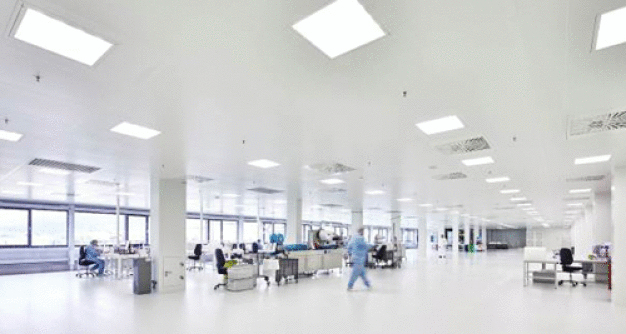
Pajunk GmbH develops and manufactures various medical technology products. At the headquarters in Geisingen, Baden-Württemberg, a new production and logistics center has been built, featuring a cleanroom of GMP Class D, covering an area of 1,015 m². (Source: bc-technology GmbH)
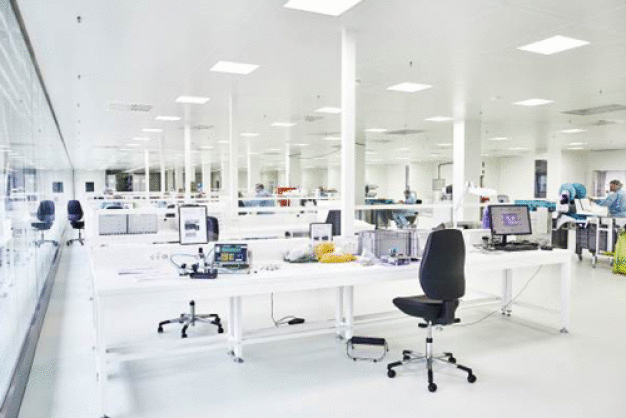
Various work steps are carried out in the new cleanroom: These include, among others, the production of products for biopsies and anesthesia as well as testing and packaging processes. (Source: bc-technology GmbH)
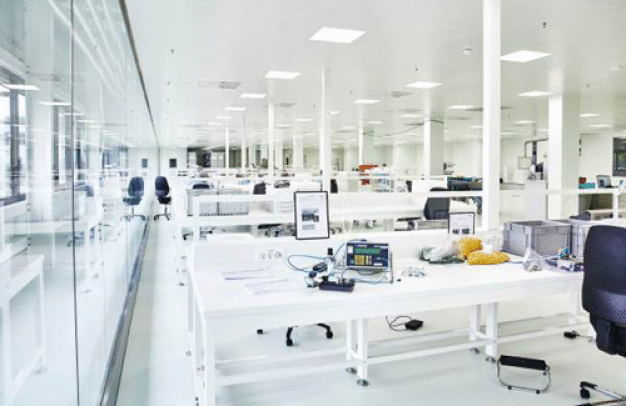
Various work steps are carried out in the new cleanroom: These include, among others, the production of products for biopsy and anesthesia as well as inspection and packaging processes. (Source: bc-technology GmbH)
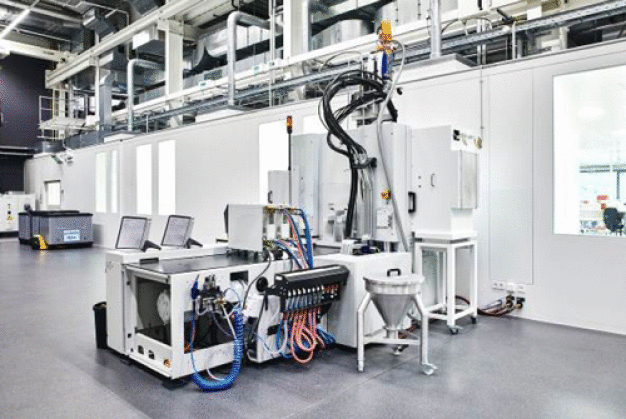
Some components are manufactured using the plastic injection molding process. However, production in the cleanroom has the disadvantage that the machines generate a lot of heat, which results in high energy consumption due to the installed air conditioning units. Therefore, bc-technology, in collaboration with the injection molding machine manufacturer, developed a concept that allows the machines to be integrated into the cleanroom wall without the development of unwanted particles. (Source: bc-technology GmbH)
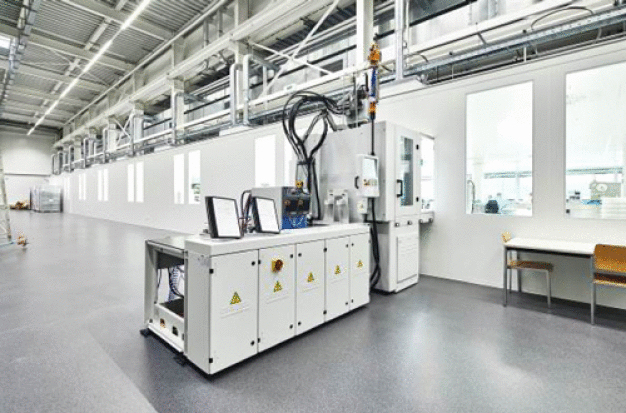
Some components are manufactured using the plastic injection molding process. However, production in the cleanroom has the disadvantage that the machines generate a lot of heat, which leads to high energy consumption by the installed air conditioning units. Therefore, bc-technology, together with the injection molding machine manufacturer, developed a concept that allows the machines to be integrated into the cleanroom wall without the development of unwanted particles. (Source: bc-technology GmbH)
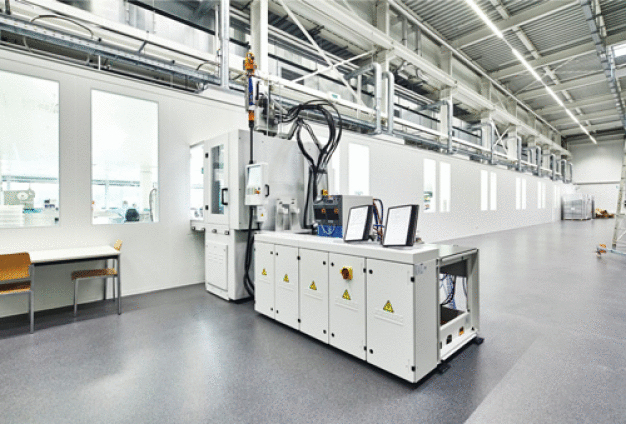
Some components are manufactured using the plastic injection molding process. However, production in the cleanroom has the disadvantage that the machines generate a lot of heat, which leads to high energy consumption due to the installed air conditioning units. Therefore, bc-technology, in collaboration with the injection molding machine manufacturer, developed a concept that allows the machines to be integrated into the cleanroom wall without the development of unwanted particles. (Source: bc-technology GmbH)
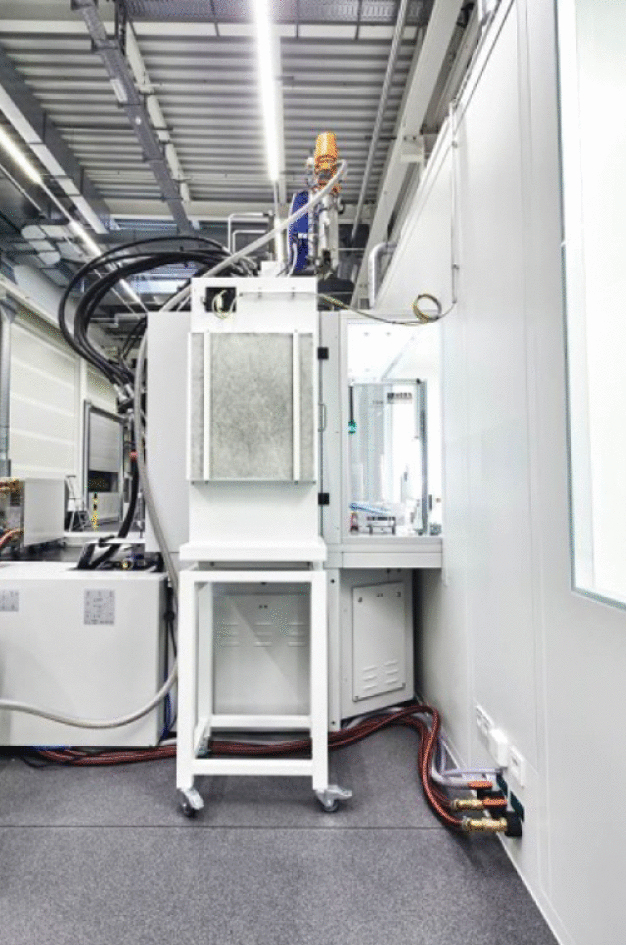
The injection molding machine is located in the black area of the new production and logistics center. However, it can be loaded and unloaded from the cleanroom. For the injection area, a horizontally flowing filter fan unit (FFU) was attached to the housing of the injection molding machine as a protective zone, ensuring that the components are always kept under cleanroom conditions. (Source: bc-technology GmbH)
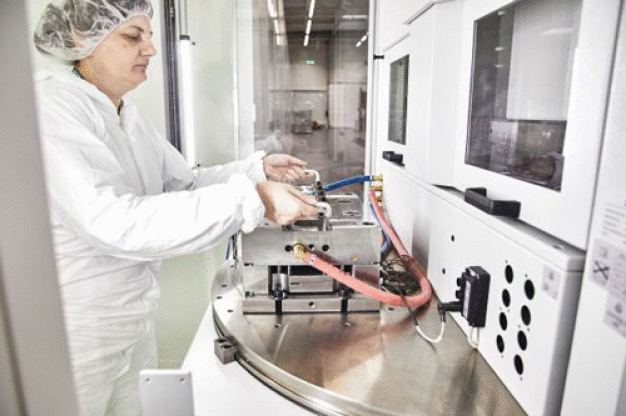
The injection molding machine is located in the black area of the new production and logistics center. However, it can be loaded and unloaded from the cleanroom. For the molding area, a horizontally flowing filter fan unit (FFU) was attached to the housing of the injection molding machine as a protective zone to ensure that the components are always kept under cleanroom conditions. (Source: bc-technology GmbH)
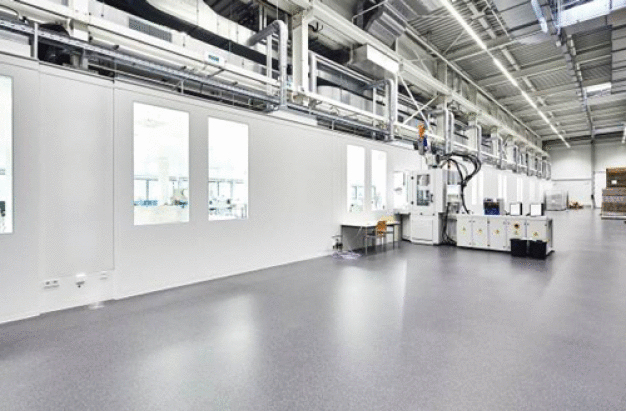
During the planning of the cleanroom, bc-technology had to consider Pajunk's requirement that machines can still be connected afterwards, which are to be put into operation at different times and independently of each other. (Source: bc-technology GmbH)
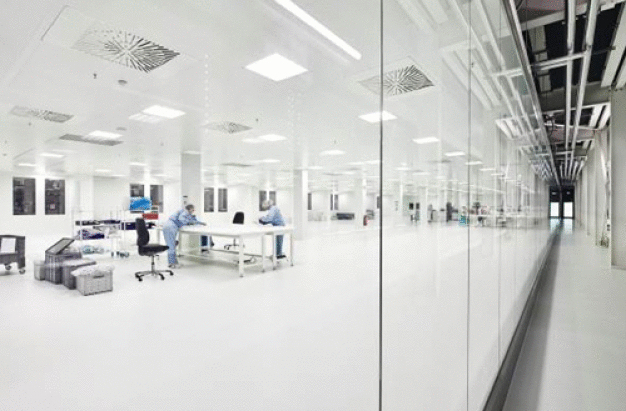
In the visitor corridor area, the cleanroom features a full-height, large-area glass wall. (Source: bc-technology GmbH)
Since the 1960s, Pajunk GmbH has been developing and manufacturing various products for medical technology. To prevent contamination by germs and particles, production must take place in cleanrooms that meet the high standards of the EU-GMP guideline. However, the production of components for biopsy and anesthesia using injection molding in the cleanroom involves high energy costs. Therefore, the company sought an energy-efficient solution for the new logistics and production center in Geisingen, Baden-Württemberg. Pajunk commissioned bc-technology GmbH to realize this: The cleanroom experts planned and delivered, in close collaboration with the involved injection molding machine manufacturer, a GMP Class D cleanroom with an area of 1,015 m2, in which the injection molding machines are directly integrated into the cleanroom wall. The facilities were designed so that additional machines can be connected in the future.
Until recently, Pajunk GmbH outsourced the manufacturing of various injection-molded parts used in everyday medical applications, including biopsy and anesthesia. The new, spacious logistics and production center with a total area of 4,550 m2 now offers the opportunity to carry out component manufacturing on-site. This allows for better control of production and streamlines the entire process chain from development to delivery. Additionally, various testing procedures are to be carried out in the cleanroom, and packaging processes in sterile barrier systems are to be performed. Another requirement for the new cleanroom was that material supply from the automatic small parts warehouse (AKL) should be automated via the material lock to optimize intralogistics transport processes.
Injection molding machines increase energy consumption in the cleanroom
However, during detailed planning, the medical technology specialist encountered some challenges. "We have very high standards for hygiene and quality of our products," explains Armin Pfeifer, Head of Quality Management at Pajunk GmbH. "At the same time, we wanted to streamline manufacturing processes as much as possible to avoid cleaning procedures after production." A common solution is to relocate the entire manufacturing process of medical technology products into the cleanroom. The problem: installing injection molding machines in the cleanroom significantly increases energy consumption. This is due to the intense heat generation during the molding process: thermoplastic injection molding reaches plastic temperatures of up to 300°C, which raises the ambient temperature. Maintaining constant temperature conditions in the cleanroom requires powerful climate control systems, which in turn consume more energy.
Therefore, Pajunk looked for a way to produce plastic injection-molded products under clean conditions while keeping energy costs low. During research and exchanges with regional manufacturers, the company became aware of bc-technology GmbH. Thanks to a convincing planning concept for the cleanroom, including auxiliary systems and MSR technology, the cleanroom specialists from Dettingen received the order from Pajunk.
Clean manufacturing conditions through integration of injection molding machines into the cleanroom
"To meet these requirements, we worked closely with the machine manufacturer involved in the project," reports Jürgen Wolf, Project Manager at bc-technology GmbH. "The injection molding machine with its associated workpiece changer is located outside the cleanroom wall in the black area of the production center. However, it was installed in such a way that it can be operated from within the cleanroom and unloaded after the injection process." To do this, the raw parts to be overmolded are placed into the mold. Then, the turntable is rotated 180° toward the machine. During the injection molding process, parts injected in the previous cycle can be removed simultaneously within the cleanroom.
To ensure that components are overmolded under cleanroom conditions, a horizontally flowing filter fan unit (FFU) was mounted as a protective zone on the housing of the injection molding machine. "We were convinced by the concept of the turbulent airflow created by the FFUs and the practical implementation. We could also clearly understand the advantages resulting from this," explains Armin Pfeifer, Head of Quality Management. The air quality of the FFU complies with Class 5 according to DIN EN ISO 14644 and is qualified as Grade A according to the EU-GMP guideline, Annex 1. Installing the injection molding machines in the black area results in only a very low thermal load within the cleanroom, which in turn means lower energy costs. Additionally, the personnel responsible can maintain the machines in the black area, simplifying internal manufacturing processes. Furthermore, the cleanroom conditions are not unnecessarily affected by particle generation.
Expandable concept for high flexibility
"An important aspect of the planning was that Pajunk wanted a concept that could be expanded later," explains Wolf. "This means that even after the completion and initial commissioning of the cleanroom, there should be the possibility to integrate and operate additional injection molding machines and other technologies such as laser welding, laser marking, and robot-assisted manufacturing independently and at different times." The project, with a size of 1,015 m² and a construction period of only 9 months, was realized successfully. The sluices cover 122 m². The cleanroom also features a full-height, large-area glass wall in the visitor corridor area. During construction, two injection molding machines were already connected to the cleanroom; a third machine was added at the end of 2018. To enable these subsequent expansions, the cleanroom is separated internally by a mobile wall. This allows the opening needed for a new machine to be cut out without contaminating the cleanroom with unwanted particles.
In 2019, further injection molding machines are planned. Since the connection concept has proven successful, it will be maintained for the integration of new machines. The managing directors, Ms. Pajunk-Schelling and Mr. Hauger, also view the project positively: "The collaboration was straightforward and constructive. We can also imagine working with bc-technology in the future."
bc-technology GmbH
72666 Neckartailfingen
Germany