


- Translated with AI
A change offers numerous advantages
Electromechanical components replace fluid technology
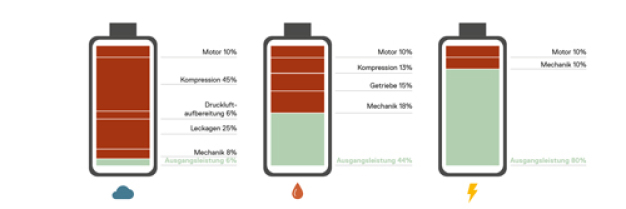
Fluid technical systems lose energy at several points. An electromechanical actuator, on the other hand, typically transmits 80 percent of its input power. (Image: Ewellix Group)
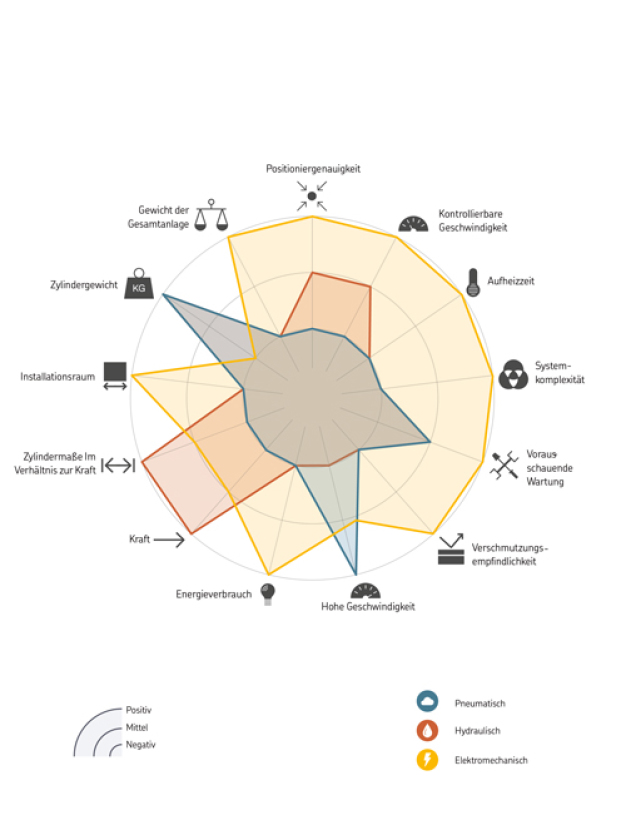
The switch to electromechanical solutions offers the user clear advantages in performance, ... (Image: Ewellix Group)
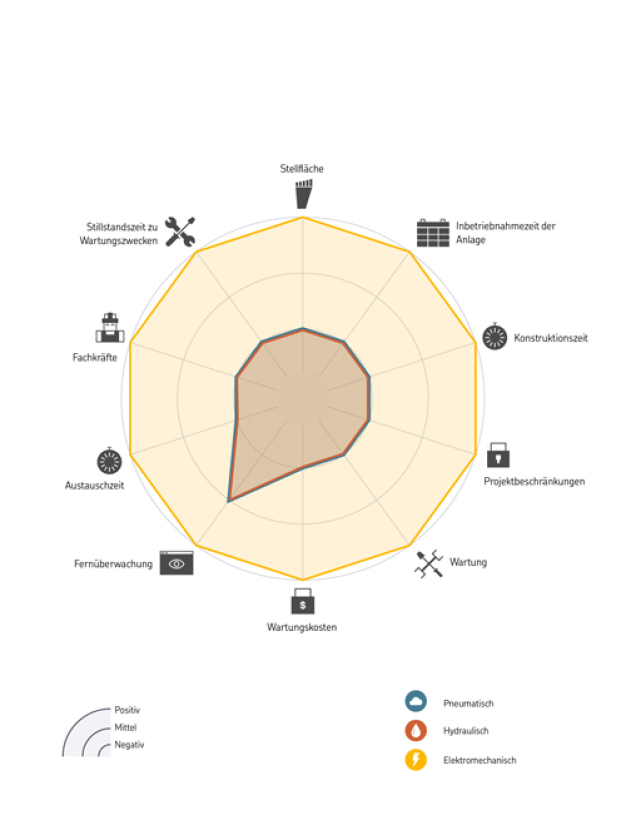
...Simplicity... (Image: Ewellix Group)
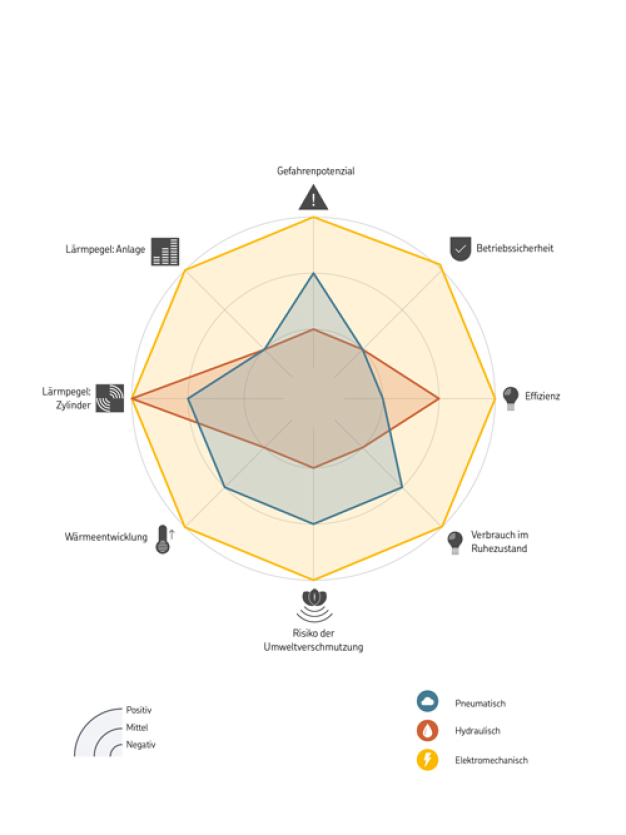
...and environmental compatibility of the systems. (Image: Ewellix Group)
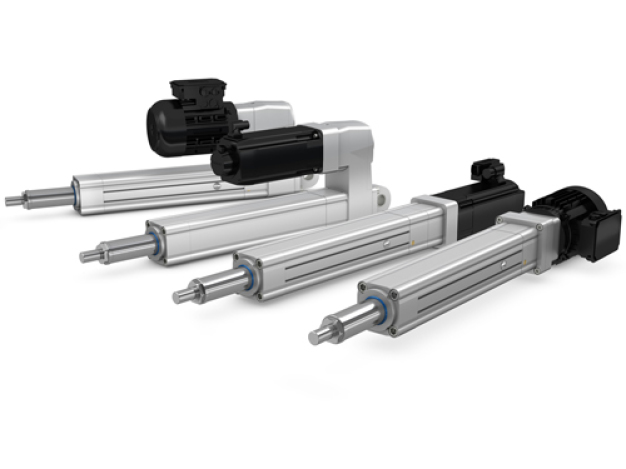
The CASM actuators are designed for very high performance and long service life. High-quality bearings and ball and lead screws ensure energy efficiency through their low friction and high precision through their minimal axial play. (Image: Ewellix Group)
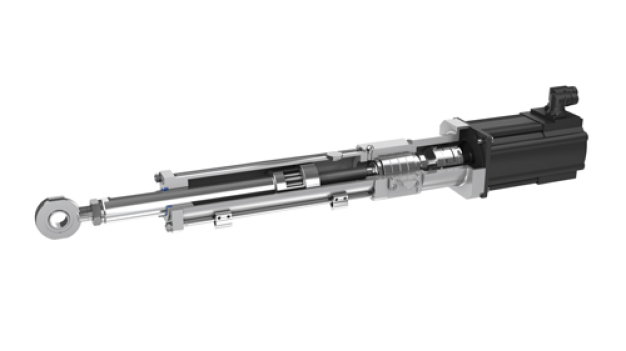
The new actuators of the LEMC series from Ewellix, designed for higher load applications, use a planetary roller screw instead of a ball screw. This gives the actuator a higher power density than conventional designs and makes it more resistant to strong vibrations from the operating environment. (Image: Ewellix Group)
Until now, engineers who wanted to generate large forces or move heavy loads primarily relied on hydraulic drives. However, fluid technology systems are now facing serious competition in the world of linear movements: electromechanical actuators, consisting of precision ball or roller screw drives, driven by an electric motor and gearbox. Electromechanical systems offer numerous advantages in performance, environmental friendliness, complexity, and cost.
A new generation of electromechanical actuators enables users to replace hydraulic and pneumatic cylinders in a variety of demanding applications – both in factory automation and mobile machinery. Not only performance but also cost benefits play a role in the switch.
Rethinking pays off
Electromechanical systems are smaller and lighter than their fluid technology counterparts. Bulky pumps, accumulators, oil tanks, and piping are eliminated because the motor is directly connected to the actuator. The systems operate without pressurized oil – reducing the risk of fires, environmental pollution, and workplace accidents. Additionally, they operate more quietly than fluid technology systems.
Furthermore, electromechanical systems offer significant performance advantages. They can operate over a broader speed and power range than hydraulic systems and provide higher positioning accuracy at the same performance level. The viscosity of hydraulic oils can change depending on runtime and temperature, negatively affecting machine performance. In contrast, electromechanical systems operate continuously with precise tolerances. The moving parts are based on proven rolling bearing technology. This allows for the prediction of their lifespan under certain operating conditions.
Since they do not require additional control valves or other accessories, electromechanical actuators can be easily integrated into a machine’s electronic control system. Moreover, their quick response times, positioning, and repeatability make it easier for users to program complex movements and build machines that can quickly adapt to different process requirements.
What’s the catch?
The purchase price of an electromechanical system is higher than that of hydraulic machines. However, when considering the total cost over the entire lifecycle, the picture changes: electromechanical actuators offer savings potentials that more than offset the higher initial costs. Six main factors are responsible for this:
1. Energy efficiency. Hydraulic systems lose energy at several points, first during the conversion of electrical energy into motion to drive the hydraulic pump. Additional losses occur within the pump itself, due to fluid friction in the transmission lines, and in the actuator. Overall, a hydraulic system only delivers about 44 percent of its drive power. In contrast, electromechanical systems lose only due to motor efficiency limits and friction in gear and drive components. An electromechanical actuator typically transmits 80 percent of its input power. Furthermore, hydraulic pumps usually need to run continuously in most applications to ensure adequate response times. The power consumption of electromechanical actuators is zero when not in use, and even during operation, they only draw their maximum energy for a short moment. Therefore, the higher initial costs of electrical systems are amortized within a few months through energy savings.
2. Reduced heat generation. The energy lost in hydraulic machines is converted into heat. In precision applications, such as manufacturing plastic products, this heat must be dissipated using cooling systems, increasing overall energy demand. Electrically operated machines require only about 35 percent of the cooling energy needed for hydraulic solutions due to their higher efficiency.
3. Shorter cycle times. Thanks to higher speeds and improved controllability, electromechanical actuators enable machines to work faster and deliver more performance, such as in robotic spot welding in the automotive industry. Between weld points, the gripper attached to the robot arm must be opened to move to the next weld position. Fluid systems fully open the gripper after each weld. Electromechanical systems can be programmed to open just enough to reposition the gripper. When a Japanese automaker switched to an electromechanical welding gripper in body shop manufacturing, this, combined with the higher speed of the new actuators, increased throughput by ten percent – equivalent to 100 additional bodies per day.
4. Improved material utilization. Increased accuracy and consistency mean that electrically driven machines generally have twice the repeatability of hydraulic alternatives. This improves quality and reduces scrap. Even with products manufactured with lower precision, the savings achieved can outweigh the higher costs of electromechanical systems within two years or less.
5. Increased operational uptime. Electromechanical systems have fewer wear parts than fluid systems, and all are located in the ball screw drive and gearbox. Hydraulic devices, on the other hand, rely on a network of valves, hoses, filters, and seals. A failure in any part of the system can halt the entire system until the problem is identified and fixed. A failure in an actuator can usually be resolved quickly by replacing the affected component. As a result, operational time and machine availability are typically about two percent higher for electromechanical systems compared to hydraulic systems. This increases performance and reduces production costs per piece.
6. Easier maintenance. Operating costs for electromechanical machines are low. Users do not need to purchase oil, filters, or seals. They do not need to stop machines to replace these parts, nor spend money on preventing or repairing leaks and fluid spills. Electromechanical systems can also be equipped with fully integrated sensors for condition monitoring. These alert maintenance personnel to potential issues before unplanned downtime occurs.
All these factors combined can save several tens of thousands of euros per year for a typical production machine. About half of this savings comes from lower energy consumption. The other half is attributable to other areas.
New generations of electromechanical actuators
In the latest generation of electromechanical actuators, Ewellix builds on all the design advantages of these components and expands them to make its products even more powerful, durable, and easier to integrate.
For example, Ewellix developed the CASM series for demanding applications in high-speed automation and large-series production. CASM actuators can replace pneumatic cylinders in existing production lines. They are modular and available in all standard sizes. They can be operated with various motor types. This allows users to equip all actuators with motors from a single manufacturer, simplifying spare parts management. A wide range of options and accessories makes integration into numerous applications straightforward.
The CASM actuators are designed for very high performance and long service life. High-quality bearings and ball and lead screws ensure energy efficiency through low friction and high precision through minimal axial play. The units are lifetime-lubricated and maintenance-free. They feature integrated filters and a wiper ring to prevent damage from dust and dirt ingress. A magnetic ring and a slotted aluminum profile housing facilitate the integration of external sensors.
To further simplify machine control and system integration, the CASM series is equipped with a brushless DC motor with a motion controller, brake, and optional fieldbus interface. This means users no longer need an external motor controller. It reduces installation costs and simplifies wiring, as the motors can be powered and controlled via a single cable. Using the graphical user interface of the Ewellix programming set, users can easily configure the machines and set all motor parameters. Up to 14 different actuator positions with corresponding speeds, accelerations, and delays can be loaded into the motor. Machine control is then carried out via a PLC or simple switches. This creates a very cost-effective, standalone motion control system for smaller machines.
The new Ewellix LEMC series actuators, designed for higher load applications, use a planetary roller screw instead of a ball roller screw. This gives the actuator a higher power density than conventional designs and makes it more resistant to strong vibrations from the operating environment. Like the CASM series, the LEMC series is modular and can be configured for many different applications and motor types. In addition to conventional servo motors, they can also be operated with an integrated gearbox and an intelligent asynchronous motor. This provides the user with additional safety and machine protection features with integrated soft start. The control is set up for NFC (Near Field Communication), allowing maintenance personnel to make adjustments conveniently with a smartphone.
Schaeffler Technologies AG & Co. KG
97421 Schweinfurt
Germany