


- Building technology
- Translated with AI
Dr. Dirk Rosencrantz
4D mobility in flexibly deployable cleanroom systems
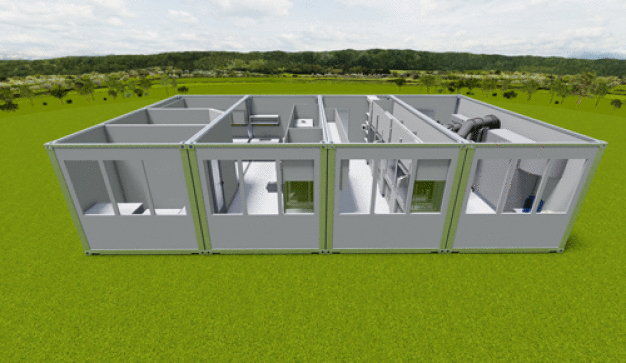
Idealized cleanroom system with 4 container units. © MK Test Facilities
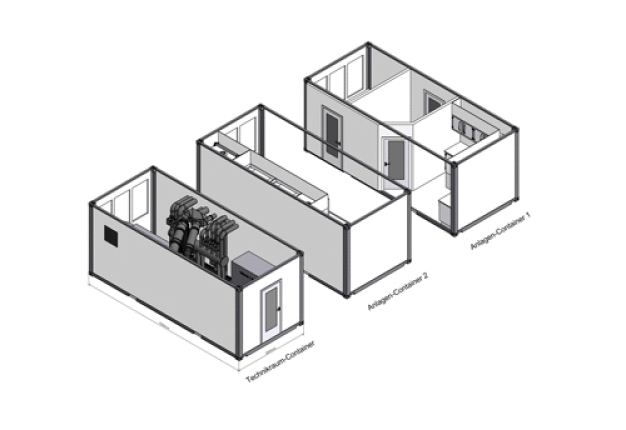
Three-part cleanroom system in schematized individual containers. © MK Test Facilities
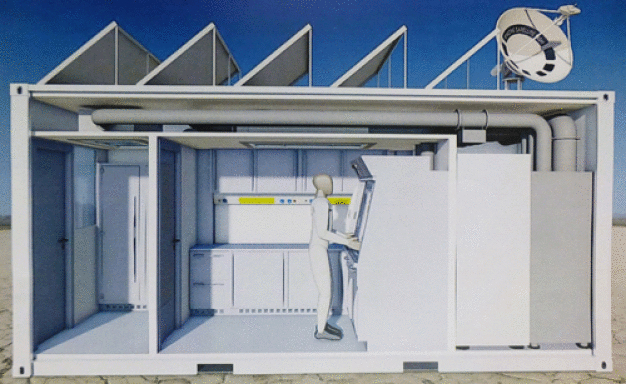
Example of a cleanroom system inside a 20-foot container. © MK Testing Facilities
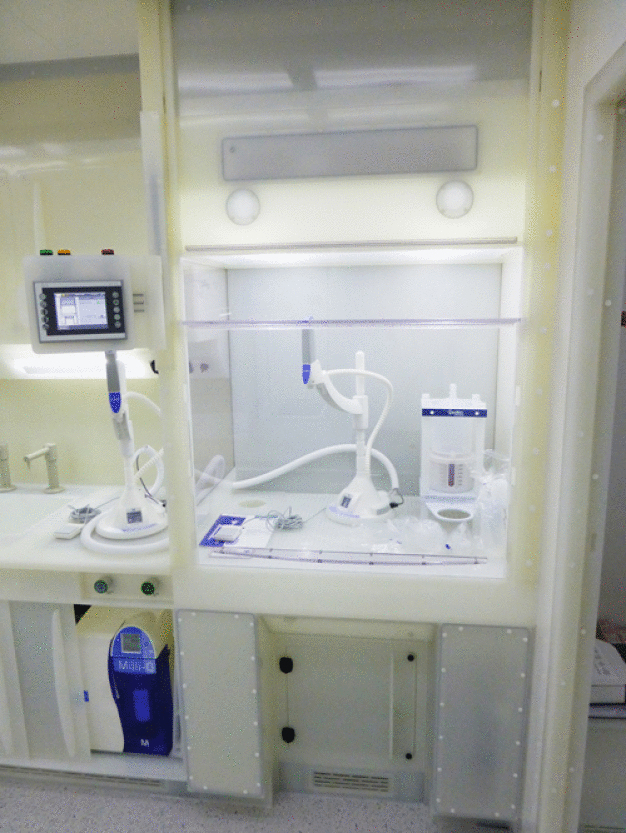
Variants of the central test facilities: Vertical laminar flow system. © MK test facilities
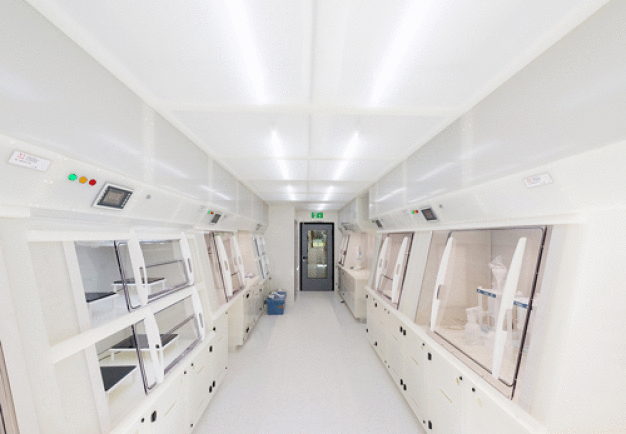
Variants of the central test facilities: horizontal laminar flow cleanroom lines. © MK Test Facilities
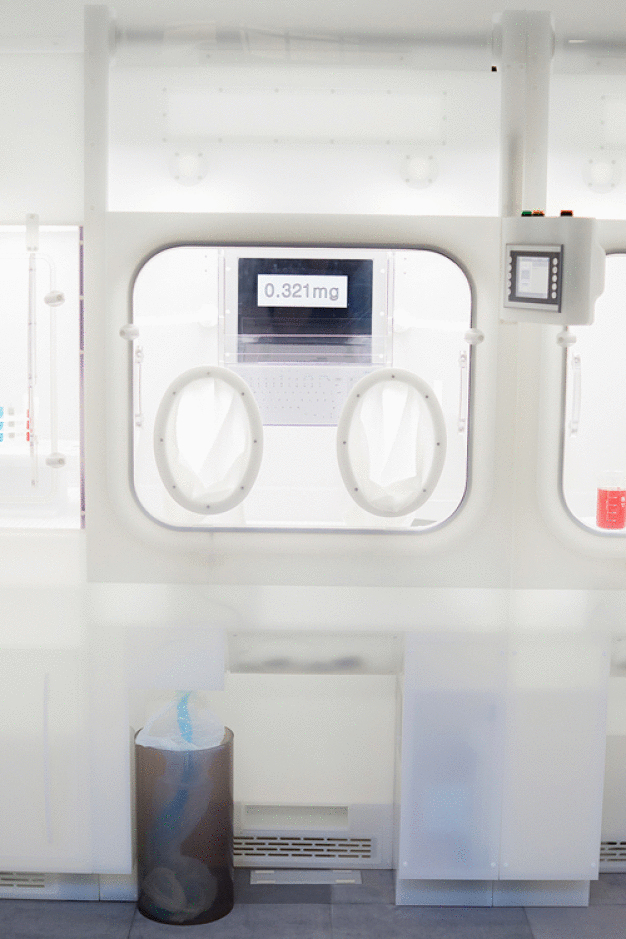
Variants of the central test systems: Isolator with glove interventions. © MK Test Systems
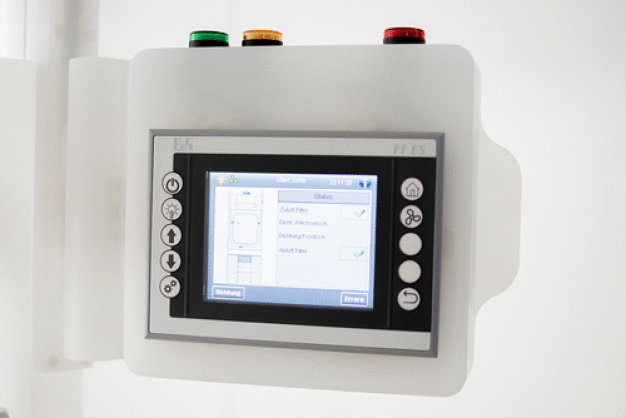
SPS control panel for the regulation and monitoring of technical parameters in cleanroom systems. © MK Test Facilities
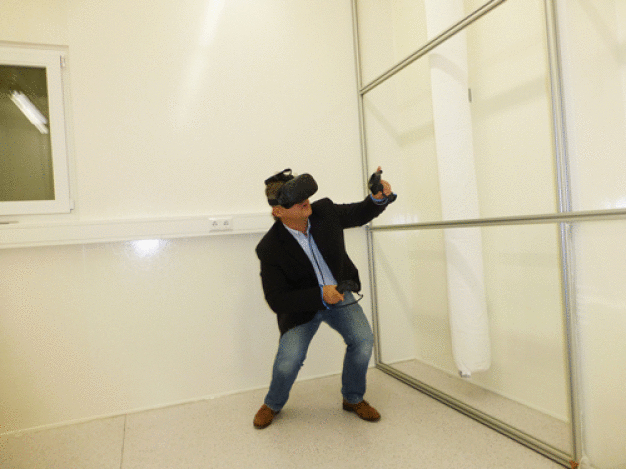
Virtual tour of the mobile cleanroom facility. © MK Testing Systems
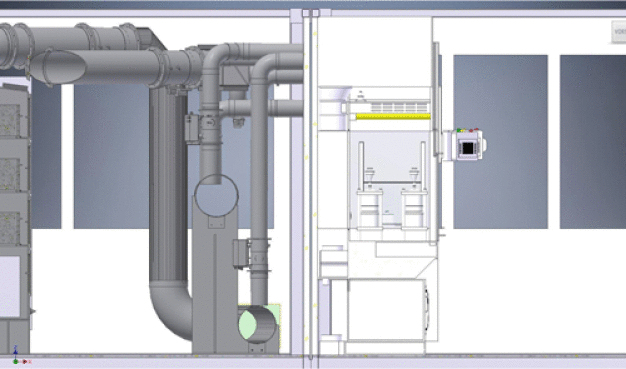
Virtual cut between the technical room and a workstation with a metal-free distillation system for acids. © MK Experimental Systems
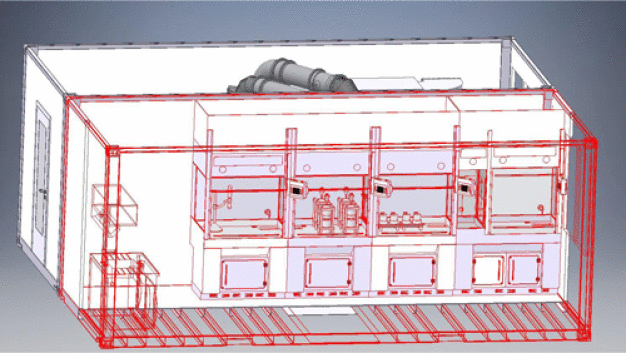
Combination of a cleanroom construction with drawing details in virtual reality. © MK Testing Facilities
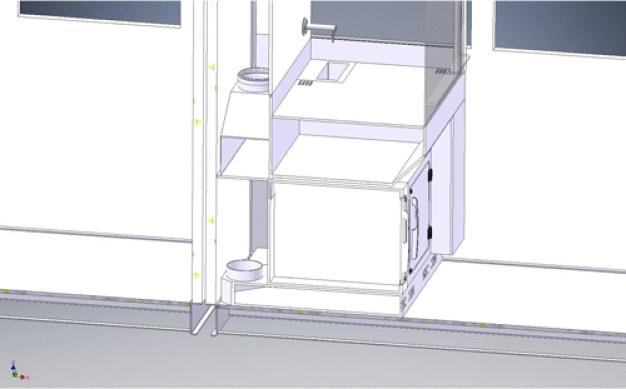
View of a glance into the laminar flow system during the virtual tour. © MK Testing Facilities
The combination is the challenge
"Is it even possible to fulfill four wishes at once? That really can't be done." Such or similar questions are frequently asked of employees at MK Test Systems, the specialist for metal-free cleanroom systems.
The customer requirements often deviated completely from the usual use within a property. According to the diverse requirements, a metal-free cleanroom system was to be developed for various analysis and research purposes. "In addition to mobile use, the goal was to vary the installed test systems and to provide different usage times. And the entire project can then be financed via a leasing model," explains Dr. Dirk Rosencrantz, member of MK Test Systems' management, describing the innovative model and emphasizing: "Our customers get all of this from a single source!"
The result of this development is based on standard 20-foot containers.
Each cleanroom system consists of three functional units:
1. Entry lock,
2. Test system center, and
3. Technology and ventilation area.
Regardless of whether the mobile systems are realized from one or multiple containers, the entry locks and technical compartments consist of standard elements, while the central test chambers can be variably designed according to customer requirements. The individual compartments can be transported via conventional methods for 20-foot containers. Each cleanroom system is equipped with conventional or locally available media connections, allowing it to be supplied with energy and, for example, water depending on the circumstances.
Variable environment and systems
The interior of the containers is made exclusively from modern plastics, which are also used in immobile metal-free cleanrooms (Carpus+Partner; Metal-Free Research Environment; p. 38-40; Printline 2017 from www.reinraum.de). Acid-resistant materials such as polypropylene, Teflon, PMMA, or PE are used, deliberately uncolored and untreated with dyes. This ensures that contamination from color particles cannot occur. The panels of the closed workstations are made from high-strength, crystal-clear polyethylene terephthalate (PET). In system variants where closed isolators are used, polyoxymethylene is used for glove access, as in the pharmaceutical industry. The interior walls of the containers are made from acid-resistant GFK cleanroom panels. The ventilation system ensures air quality that meets class 6 according to DIN EN ISO 14644 within the work area. In laminar flow workstations, particle-free conditions are maintained at levels of classes 4 or 5. Metal-free pre-filters with H14 final filters ensure a separation efficiency of >99.995% and enable particle-free conditions in isolators that even surpass the higher standards of class 4.
The variably configurable test systems can be installed as wet benches, with workstations supplied with clean air, as laminar flow systems, or as fully enclosed isolators. MK's self-developed PLC system allows control of the entire cleanroom system and monitors parameters such as pressure, airflow, seals, volume flow regulators, temperature, energy, and other technical parameters.
Different application and customer requirements
The use of plastics offers the advantage that transporting the systems is significantly easier due to their low material weight. Lifting and setting down the containers do not require special cranes. Furthermore, the plastic systems allow working with extremely strong acids that customers need to prepare, for example, rock samples for ultra-trace analysis. In other cases, MK systems are used for handling organic samples that are to be examined in the plastic environment because plastics pose no risk of cross-contamination. It is highly risky to perform most demanding analyses in conventional steel systems, especially when analyzing iron or other metal isotopes.
The integrity of the sample is of highest priority
Changes to rock and soil samples, meteorites, minerals, and organic samples could be irreversibly destroyed by the entry of metals before reaching the home laboratory. To meet the requirements of demanding customers, MK's developers believe that the integrity of the collected sample is significantly elevated to a new level: "Because a mobile solution brings the cleanroom to the sample, not the sample to the cleanroom, the risk of contamination is dramatically reduced without unintentionally altering the valuable sample during transport," explains Dr. Dirk Rosencrantz.
Virtual reality for 3D planning of customized special applications
By combining standardized modules with customer-specific system requirements, variable test centers are to be created. To achieve this, MK uses 3D software and hardware to make constructed model worlds experienceable through virtual reality. The requirement-specific CAD data are transformed into a walkable experience through 3D animation at a 1:1 scale. For example, it is possible to virtually walk through the future cleanroom. MK's engineers, as well as customers, are enabled to recognize, adapt, and experience the prototype with different eyes before manufacturing the key system module.
Time-dependent deployment with project-based leasing instead of investment
The 4D mobility model for MK not only includes the mobile use of variably designed test systems for different purposes but also offers tailored leasing financing due to the limited project duration.
MK Test Systems' collaboration with a private bank allows customers to lease the cleanroom systems for between 2.5 and 5 years. This makes it possible to treat the incurred costs differently than with standard investments in immobile cleanrooms.
Thanks to the modular design of the cleanroom system, it is possible to realize alternative system configurations depending on the progress of the research process by exchanging the central test module, without replacing the entire system. For example, a test series could be conducted first in a jungle environment and later in a steppe, with the exchange of the central test module ensuring no contamination or cross-contamination occurs.
The use of a mobile solution also allows any researcher to quickly utilize the cleanroom system without waiting for a new building and its financing. And finally, the exchange capability enables adaptation of the system technology to innovative advances that evolve over time. Lengthy procedures to quickly implement technical innovations in a property are now a thing of the past with MK Test Systems' 4D model.

MK Versuchsanlagen GmbH & Co. KG
Stückweg 10
35325 Mücke-Merlau
Germany
Phone: +49 6400 9576030
Fax: +49 6400 9576031
email: info@mk-versuchsanlagen.de
Internet: http://www.mk-versuchsanlagen.de