




- Translated with AI
2 Nm in 1 s/90°: New super-fast actuators control ventilation systems especially quickly and safely
20 percent more torque, 20 percent less reaction time
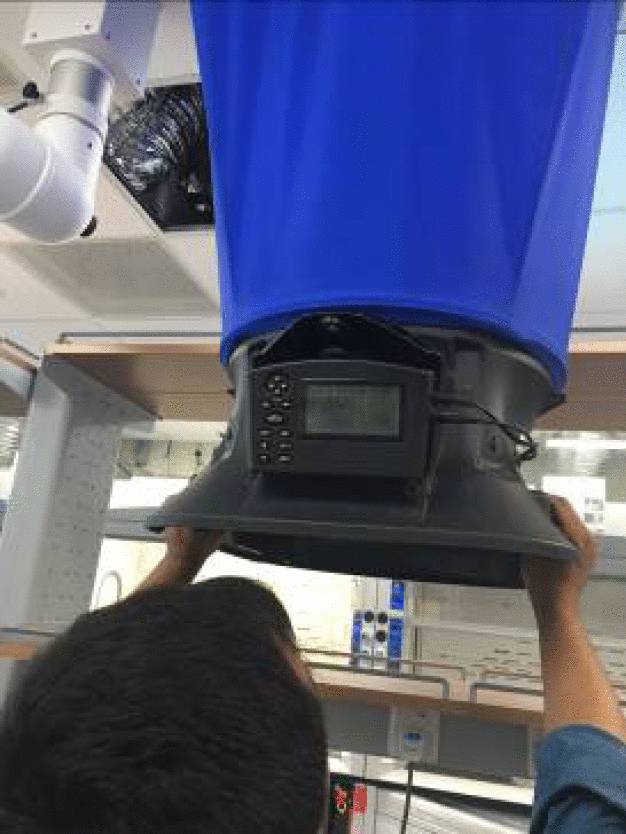
To ensure that the volume flow regulation in laboratories, cleanrooms, and digesters is carried out as energy-efficiently and safely as possible, the installed rotary actuators must meet high requirements. Especially for the dampers of laboratory exhausts, a short closing time is essential to prevent unfavorable pressure differences in the rooms and to ensure that employees are not endangered by toxic fumes. (Source: Gruner AG)
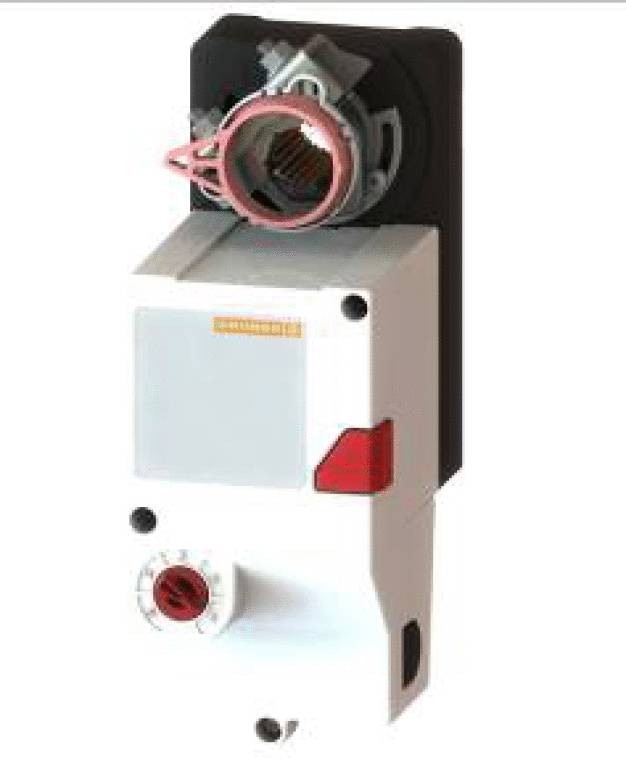
In extreme cases, drives for air exhaust systems in laboratory environments must have operating times of at least 3 seconds or less. To meet these requirements, Gruner has developed four different ultra-fast actuators: two models achieve a torque of 10 or 15 Nm at an operating time of 3 s/90°, while two others with 2 s/90° at 5 Nm and 1 s/90° at 2 Nm have particularly short response times. (Source: Gruner AG)
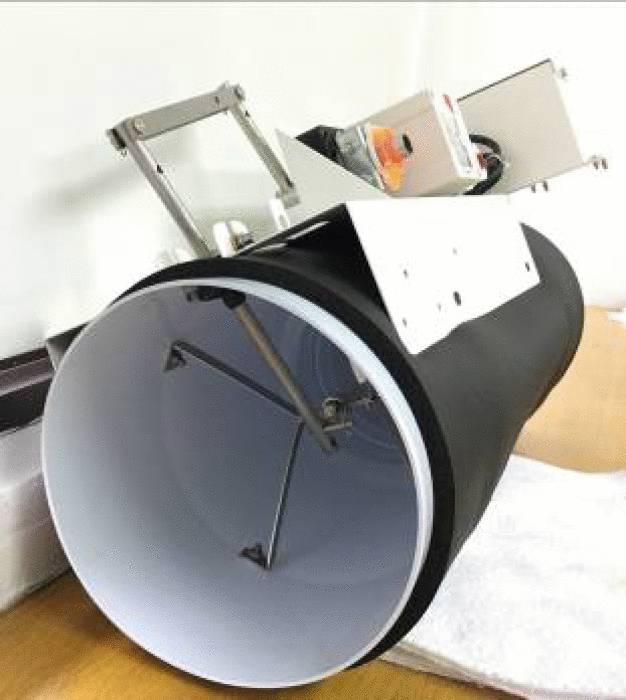
The torque requirement depends on various factors such as the hinge construction, bearings, and seals. The advantage of the new Gruner drives in operation: Compared to similar models, they have 20 percent higher torque and reliably control high air velocities. (Source: Gruner AG)
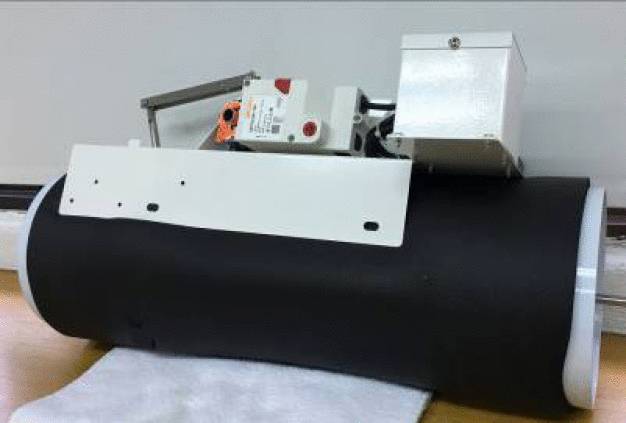
The super fast runners are characterized by closing times that are 20 percent shorter and can therefore adapt much better to changing conditions than conventional solutions. (Source: Gruner AG)
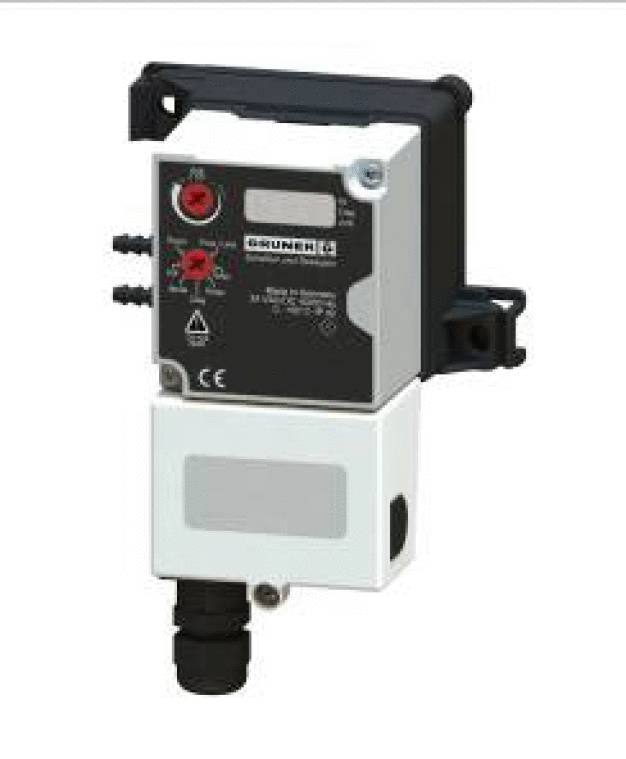
In applications where the medium in the ventilation duct is heavily contaminated or enriched with aggressive media, the super fast runner should be used in combination with a GUAC (Gruner Universal Actuator Controller) as well as a static sensor. (Source: Gruner AG)

"The biggest challenge in developing the super-fast runners was to design this component as part of a control system in such a way that the overall system exhibits high stability," said Dr.-Ing. Wolfgang Spreitzer, Board Member of Gruner AG. "Additionally, we had to specifically adjust the circuitry for the very high torques to ensure that the necessary energy for the motor movement could be supplied." (Source: Gruner AG)
To ensure that the volume flow regulation in laboratories, cleanrooms, and digesters is as energy-efficient and safe as possible, the installed rotary actuators must meet high requirements. Especially for damper valves in laboratory exhaust systems, a short closing time is essential to prevent unfavorable pressure differences in the rooms and to avoid endangering staff from toxic fumes. To provide suitable actuators for operating times of 3 seconds or less and to increase operational safety in this challenging environment, Gruner AG has revised its portfolio and developed four new, different ultra-fast actuators. These are characterized by a 20 percent higher torque and a 20 percent faster response time compared to previous actuators: In addition to a model that achieves 1 second/90° at 2 Nm, there are also types with 2 seconds/90° at 5 Nm, 3 seconds/90° at 10 Nm, and 3 seconds/90° at 15 Nm operating times. They can adapt much better than conventional solutions to changing conditions and reliably control high air velocities.
"Ultra-fast actuators – rotary actuators for damper adjustment in HVAC systems with a very short operating time of < 3 seconds – can be used for variable volume flow control to achieve energy savings with optimal safety," explains Dr.-Ing. Wolfgang Spreitzer, Vorstand of Gruner AG. "They are also suitable for various regulations according to EN 14175 for tested laboratory exhaust systems." Fast actuators – models with speeds of 5 seconds – have already been part of Gruner's program for twelve years, including only two ultra-fast models so far. "However, market demands have changed. Especially in cleanrooms, laboratories, or sterile environments, there is a need for types that implement higher torques at shorter operating times and medium torques at very short times," continues Spreitzer.
These models are a key component for safely and precisely controlling both supply and exhaust air, as well as the extraction from digesters. In this way, the actuators ensure that unfavorable pressure differences do not occur at any time – an important prerequisite for ensuring work safety in laboratory exhaust systems and preventing employees from being exposed to additional toxic fumes. Furthermore, especially in pharmaceutical manufacturing, rapid and highly precise regulation of air volume or pressure is necessary, as otherwise there is a risk of contaminating medicines in cascaded areas.
Regulating high air velocities safely
In extreme cases, actuators for laboratory exhaust systems must have operating times of at least 3 seconds or less. To meet these requirements, Gruner has developed four different ultra-fast models: Two models reach a torque of 10 or 15 Nm at an operating time of 3 s/90°, while two others with 2 s/90° at 5 Nm and 1 s/90° at 2 Nm feature especially short response times. "In some cases, even shorter operating times are requested, which have so far been realized with pneumatic actuators," explains Spreitzer. "Here, the ultra-fast actuator with a 1 s/90° operating time can be used. This results in a more cost-effective system design while maintaining operational safety."
All new Gruner models feature special motors with newly designed gearboxes, brushless internal rotors, and sophisticated control algorithms, which together ensure an especially long service life of 100,000 full cycles or 1,500,000 partial cycles. The use of brushless internal rotors achieves a very high torque density with high rotational speed. "Higher torques are needed to move the damper blade safely even at high air velocities. You can imagine the damper blade like an airplane wing," says Spreitzer. "The flowing air generates lift, which is converted into a rotational movement via the damper's bearing, creating a torque opposite to the opening direction."
Safe, stable system even at high torques
The torque requirement depends on various factors such as damper construction, bearings, and seals. For example, a particularly large louver damper measuring 100 x 120 cm with a leak air flow when closed (according to EN 1751 with a test pressure up to 2000 Pa in class 4) requires a breakaway torque of at least 20 Nm. This is fulfilled by the type 227CS-024-15B – the model with 15 Nm at an operating time of 3 s/90°. Gruner's ultra-fast actuators typically have a breakaway torque about 35 percent above the nominal torque. "The biggest challenge in developing the ultra-fast actuators was designing this component as part of a control system so that the overall system remains highly stable," explains Spreitzer. "Additionally, we had to adjust the circuitry, especially for very high torques, to ensure the necessary energy for the motor movement is available."
However, the newly developed actuators not only achieve 20 percent more torque than comparable solutions but also have a 20 percent faster operating time. This advantage allows for particularly quick regulation of changing requirements in ventilation systems and continuous assurance of operational safety. The short response times are achieved through precise coordination between mechanical gear reduction, the internal rotor, and control algorithms.
Static sensor for contaminated, aggressive media
Since some applications require different rotation angles, the ultra-fast actuators also feature scalable control accuracy: Gruner actuators are generally supplied with a standard 90° rotation angle, which can always be reduced. To maintain the available resolution of 10 V, the angle can be adjusted accordingly. Additionally, a safety switch has been integrated to ensure that the gearbox is not damaged during manual operation. The switch turns off the motor as long as the manual override button is pressed.
In applications where the medium in the ventilation duct is heavily contaminated or contains aggressive substances, the ultra-fast actuator should be used in combination with a GUAC (Gruner Universal Actuator Controller) and a static sensor. The sensor element is not traversed by the medium and thus cannot be damaged by it. The component also offers other advantages: it is independent of position, so the ventilation damper does not need to be calibrated for the installation position. This eliminates a potential source of error. "Furthermore, it has high long-term stability, meaning no cyclic calibration is necessary," says Spreitzer. "This is particularly challenging in cleanrooms, such as in pharmaceutical or chip manufacturing, where the process cannot be performed during ongoing operation."



